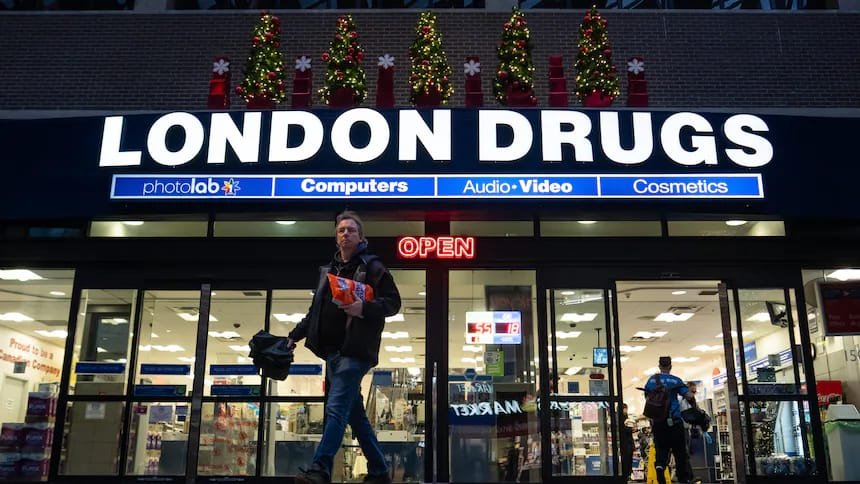
More Than a Store Closure — A Symptom of a Deeper Urban Failure
The decision by London Drugs to close its Downtown Eastside (DTES) Vancouver location on Feb. 1 is not merely a business move — it is an indictment of the city’s failure to balance compassion with accountability. While headlines may frame this as another casualty of crime or economic pressure, the deeper truth is more uncomfortable: Vancouver has allowed one of its most historically complex neighborhoods to deteriorate into an environment where even essential retailers can no longer operate safely or sustainably.
When Good Intentions Produce Bad Outcomes
The DTES has long been the focus of well-intentioned policies centered on harm reduction, social support, and housing-first strategies. Yet intention without enforcement has consequences. Retailers like London Drugs are not abandoning the area out of indifference — they are being pushed out by unchecked theft, vandalism, and safety risks to staff and customers.

A pharmacy is not a luxury business; it is a critical service. When a store selling prescriptions, hygiene products, and household essentials cannot function, it signals that the ecosystem has collapsed. No amount of social spending can compensate for a neighborhood where everyday commerce becomes impossible.
The Silent Victims: Residents Who Rely on Local Access
Ironically, the people most harmed by this closure are not corporate executives or suburban shoppers — they are DTES residents themselves. Many rely on nearby pharmacies for medication, health supplies, and basic necessities. For seniors, people with mobility challenges, or those without stable transportation, the loss of a centrally located store is not an inconvenience — it is a barrier to survival.
This raises a critical question: who exactly are current policies serving if essential services are being driven out?
Businesses Cannot Be the Front Line of Social Policy
Expecting private businesses to absorb the cost of social disorder is neither fair nor realistic. Retail workers are not trained social workers, security officers, or crisis responders — yet they are often forced into those roles. When theft becomes routine and safety incidents escalate, closing becomes a rational, not heartless, decision.
Cities that thrive understand this balance. Compassion must coexist with boundaries. Support systems must operate alongside law enforcement and public order. Without that equilibrium, businesses leave, services disappear, and communities hollow out.
A Warning for the Rest of Vancouver
The DTES London Drugs closure should concern every Vancouverite. This is not an isolated incident — it is a preview. If the city continues to tolerate conditions that make lawful business untenable, other neighborhoods will follow the same path. Investment will retreat. Services will thin. And the social problems policymakers claim to address will only intensify.
Urban decline does not begin with boarded-up windows; it begins when institutions quietly decide they’ve had enough.
The Choice Ahead: Ideology or Reality
Vancouver now faces a choice. It can continue to frame these closures as unfortunate but unavoidable, or it can confront the reality that policies without enforcement are failing both vulnerable populations and the broader community.
London Drugs’ departure is not a moral failure by a corporation — it is a policy failure by a city. Until leaders acknowledge that truth, more closures will follow, and the Downtown Eastside will continue to lose exactly what it needs most: stability, access, and hope.
About the Author




Alright ZC777, let’s se what makes three number 7s so special, shall we. Test your luck and maybe win the pot! Click here to find out: zc777