








The Incident
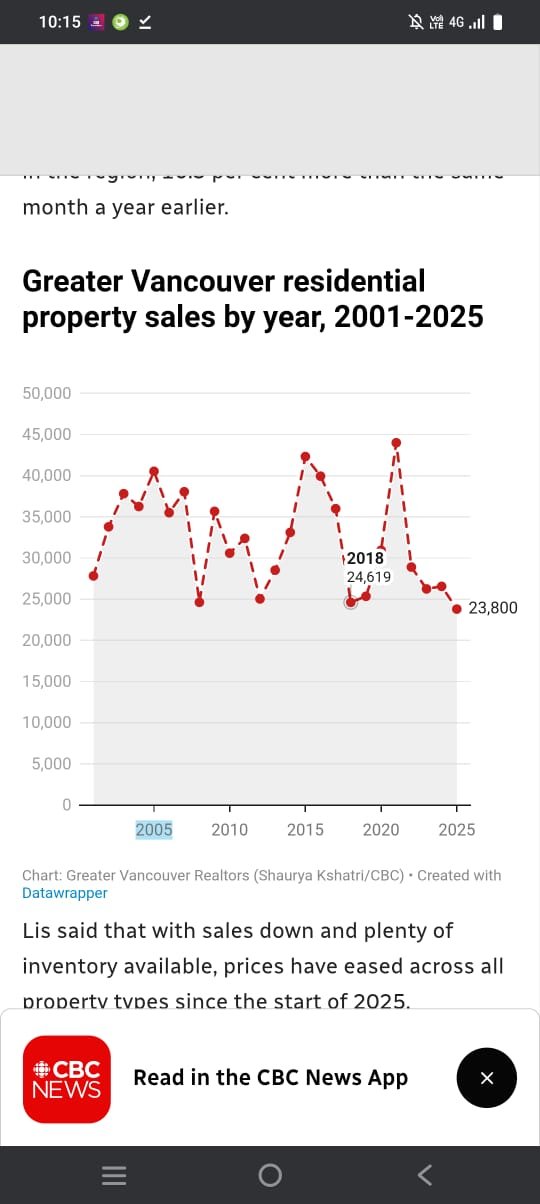
In what real estate experts are calling a market “for the history books,” Vancouver and its surrounding region wound up 2025 with the fewest home sales in more than two decades. Last year, just 23,800 homes were sold on the Metro Vancouver Multiple Listing Service (MLS) — a drop of more than 10 per cent from the previous year and nearly 25 per cent below the 10-year average. The figures capped off a December where sales were down nearly 13 per cent on a year-over-year basis, signaling an unprecedented lull in a housing market that has long been among Canada’s most active.
Location & Context
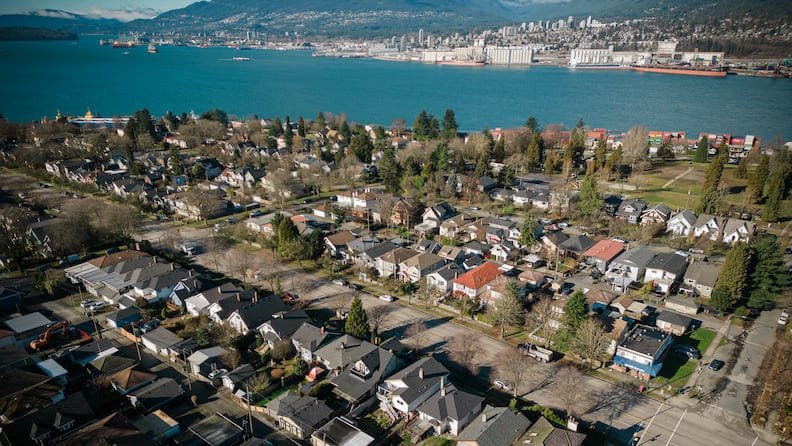
Greater Vancouver — a mosaic of waterfront neighbourhoods, leafy suburbs, and high-rise-dotted downtown cores — has for generations been a magnet for first-time buyers, growing families, and newcomers seeking a slice of urban coastal life. But in 2025, the current of demand slowed to a trickle. While more homes were listed for sale than at any time since the mid-1990s, buyers stayed on the sidelines. The composite benchmark price for all residential properties dipped below $1.12 million by year’s end, reflecting the imbalance of high supply and cautious demand.
What Is Known So Far
Experts point to a confluence of economic and psychological forces behind the slump. Although borrowing costs eased somewhat over the year, consumer sentiment remained fragile. Many potential buyers postponed decisions, wary of broader economic uncertainty and shifting job markets. Meanwhile, homeowners who might once have considered trading up or downsizing kept their properties listed longer, hesitant to re-enter a market where offers were scarce. The result: a glut of inventory — more than 65,000 listings in 2025 — and a sales pace that lagged far behind historical system.
Broader Reflections
Behind these figures lies a deeper story about how deeply housing touches the everyday lives of Vancouver’s residents. For parents, the dream of owning a family home with space for children to grow seems more elusive with each passing year. Young couples weigh the cost of condo living against the reality of rent that continues to climb. Long-time residents wonder if the city they’ve known is slipping out of reach for the next generation. While prices have eased, the emotional toll of uncertainty — especially in a place where homes have long been both shelter and investment — has been profound.
Community Reaction
Across neighbourhoods from Kitsilano to Surrey, reactions have been mixed but heartfelt. Realtors speak of a market in hibernation, with open houses drawing fewer visitors and deals taking longer to close. Sellers, once confident their properties would spark bidding wars, now grapple with reducing prices and reconsidering plans to move. On social media and community boards, threads about listings, price drops, and waiting for “the spring surge” are tinged with both hope and frustration. Some younger buyers voice optimism that affordability is improving; others lament that even reduced prices remain out of reach for many families.
The Road Ahead
Looking to 2026, many in Vancouver’s housing ecosystem are holding their breath. With plentiful inventory and slightly lower borrowing costs, conditions may be more favorable on paper for well-qualified buyers. But whether sentiment truly shifts — and whether the market can regain its footing without leaving behind those who hoped 2025 would be their year to buy — remains the critical question. Economists and community leaders alike are watching closely, aware that housing is not just an economic metric but the foundation of family life and community stability.
In the end, the story of Vancouver’s historic sales slump is more than numbers on a page. It is a mirror held up to the hopes, dreams, and daily realities of people across the region. As families weigh their future and neighbours lend support to one another, the slump underscores a timeless truth: that behind every home sale or unsold listing is a story of aspiration, resilience, and the human yearning for a place to belong.