The Outrage Heard Around Social Media
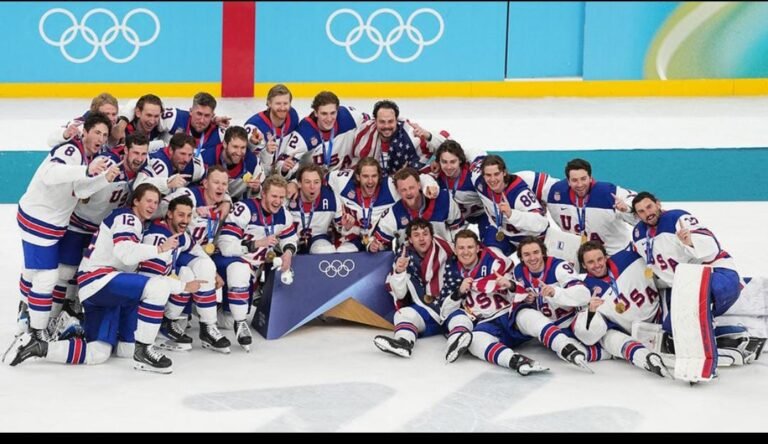
When members of the U.S. men’s hockey team appeared to laugh at a remark made by Donald Trump, the backlash was swift and predictable. Social media erupted with accusations of disrespect, political bias, and unpatriotic behavior. For many critics, the reaction wasn’t just about a laugh—it was about loyalty, decorum, and national representation.
But before we rush to judgment, it’s worth asking a deeper question: What exactly are we demanding from athletes in politically charged moments? And why does a fleeting facial expression carry so much symbolic weight?
The Burden of Representation
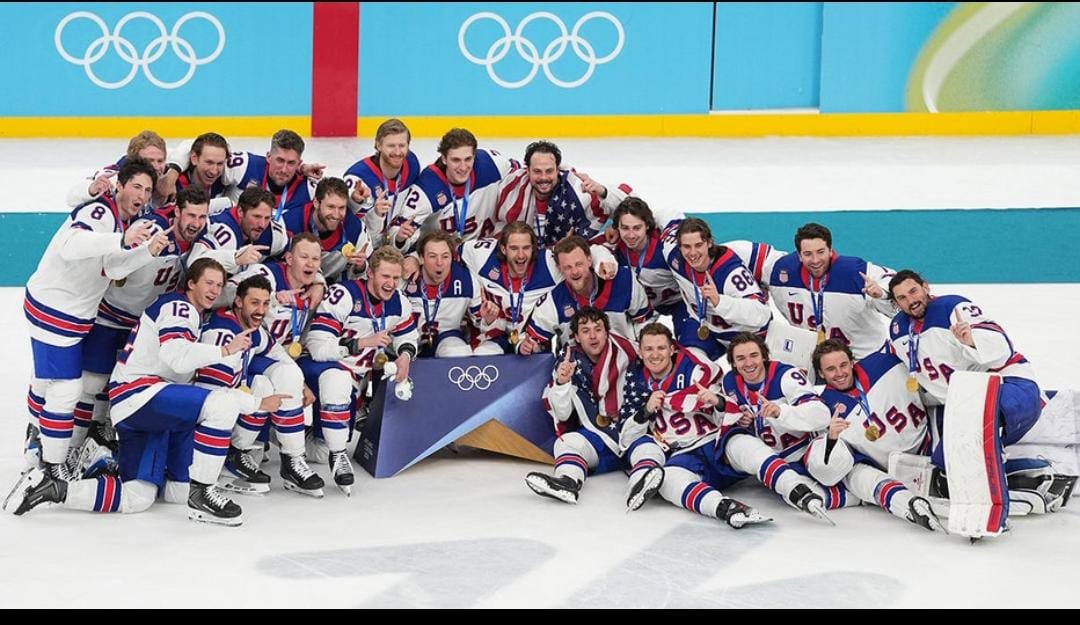
Athletes representing the United States, particularly in a sport as culturally tied to national pride as hockey, are often viewed as extensions of the flag. Whether competing under USA Hockey or within leagues like the National Hockey League, players are expected to embody discipline, unity, and respect.
However, that expectation can quietly morph into something more restrictive: a demand for emotional neutrality—especially when politics enters the arena.
Here’s the reality: these players are not diplomats. They are young men operating in high-pressure environments, frequently reacting in real time. Laughter is not always endorsement. Sometimes it is nervous energy. Sometimes it is surprise. Sometimes it is simply human reflex.
To interpret it as a calculated political statement may say more about our polarization than about their intentions.
Sports and Politics: An Inseparable History
Those insisting that sports should remain apolitical ignore decades of precedent. From Muhammad Ali refusing the draft to Colin Kaepernick kneeling during the national anthem, athletes have long been entwined with political discourse.
The difference here is scale and symbolism. A direct protest is intentional and declarative. A moment of laughter is ambiguous. Yet the reaction has been equally intense.
This reveals something important: modern outrage is less about the act and more about the narrative it can be attached to. In a hyper-digital world, a two-second clip can be weaponized into a cultural flashpoint.
The Double Standard of Public Figures
Consider this: politicians routinely criticize athletes. They question their patriotism, their salaries, their activism. Yet when athletes display even the slightest unscripted reaction to a political figure, they are accused of crossing a line.
That asymmetry is revealing.
If public officials can comment freely on sports, culture, and celebrity behavior, why are athletes expected to operate in an emotional vacuum? Respect is a two-way street.
The Real Issue: We’re Projecting
The intensity of the backlash reflects how deeply divided the country remains. For some viewers, the laugh symbolized defiance. For others, it signaled immaturity. But in truth, most of the outrage is projection—fans seeing what they want to see through their own political lens.
This is the danger of reducing complex individuals to political avatars. These players train for years to compete at elite levels. Their focus is competition, strategy, and teamwork—not partisan messaging.
When we assign ideological meaning to every facial expression, we risk trivializing both sports and politics.
A Call for Perspective
Criticism of public behavior is fair game in a democracy. But perspective matters. We must distinguish between intentional political statements and spontaneous human reactions.
Demanding perfection from athletes while excusing impulsiveness from politicians is inconsistent. Expecting emotional silence in politically charged settings is unrealistic. And turning fleeting moments into moral battlegrounds only deepens division.
The U.S. men’s hockey team’s alleged laughter may have been awkward, ill-timed, or misunderstood. But it was not a constitutional crisis. It was a human moment in a hyper-sensitive environment.
Perhaps the more pressing question isn’t “What was so funny?” but rather: Why are we so ready to be offended?
Until we confront that, every smile, smirk, or chuckle will continue to spark unnecessary outrage—on the ice and far beyond it.
About the Author