A Perilous Escalation: Not Just Another Middle East Flare-up
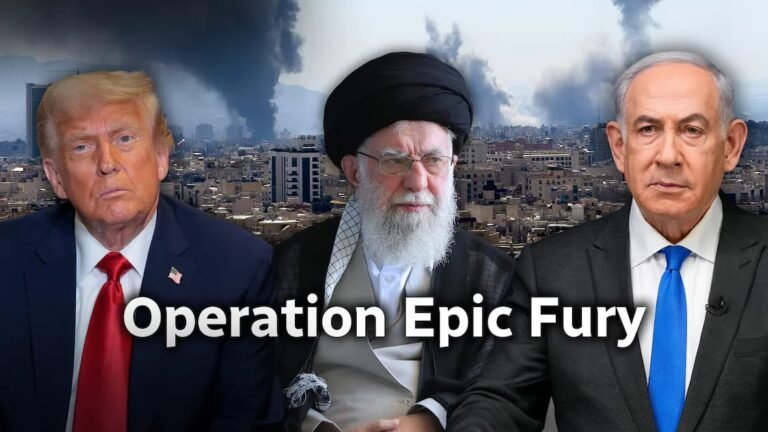
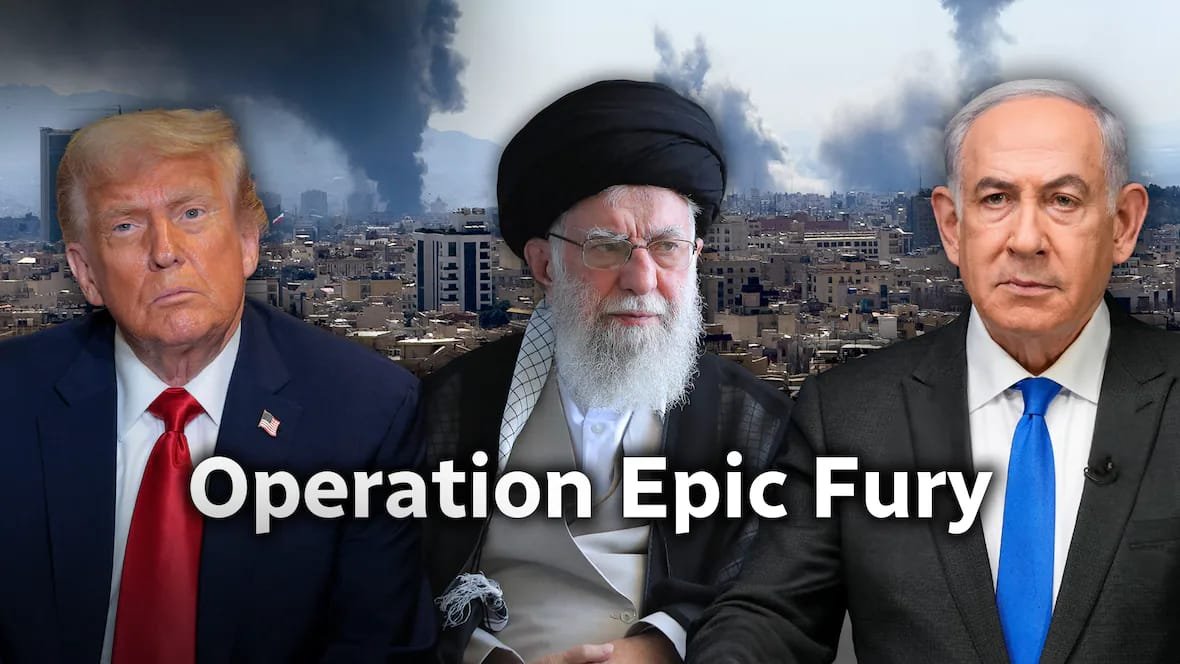
The recent widening of the Middle East conflict — marked by joint U.S. and Israeli strikes deep inside Iran and retaliatory drone and missile attacks that struck the U.S. Embassy in Riyadh, Saudi Arabia — is not merely another episode in a long history of hostilities. What we are witnessing is a seismic shift in regional dynamics that carries deep and lasting implications for global peace, strategic alliances, and international norms.
This is not asymmetric tit-for-tat. It is a strategic rupture that must be understood on its own terms.
The Illusion of Precision: When “Limited Damage” Masks Strategic Failure
Officials have described the strikes on the U.S. Embassy in Riyadh — confirmed hits by Iranian drones that caused a limited fire and minor material damage — as contained, with no immediate casualties. � But focusing on the scale of physical destruction misses the point entirely. The symbolic nature of this attack — directed at a core instrument of American diplomacy in a key Arab capital — is far more consequential than the superficial assessment of material damage.
Iran’s ability to launch drones across hundreds of kilometers into Saudi airspace and penetrate sensitive diplomatic zones signals a sobering reality: air defenses designed for deterrence are now struggling to keep pace with evolving threats.
This isn’t about whether walls were breached, but what the breach means geopolitically.
Regional Unraveling: Not Just Between Tehran and Washington
The conflict’s ripple effects stretch far beyond U.S.–Iran bilateral hostilities. In just the past few days, Iranian missiles and drones have struck multiple Gulf states — including the United Arab Emirates, Bahrain, Kuwait, Qatar and Iraq — in direct retaliation for the U.S.-Israeli offensive. These attacks have forced precautionary shutdowns of oil refineries, disrupted energy markets, and raised the specter of a regional conflagration.
Consider this: the massive closure of major energy infrastructure and halting of tanker traffic through the Strait of Hormuz — a chokepoint for nearly 20% of global oil trade — is not random collateral damage but an intentional leverage point with global economic implications.
In other words, this conflict isn’t confined to diplomatic isolation and battlefield exchanges; it is now systematically undermining global energy stability.
Diplomacy Undermined by Military Momentum
Virtually all peace processes are now collateral in this clash. Diplomatic channels, once fragile but active, are rapidly losing ground to military momentum. Just days earlier, the United States was engaging in negotiations with Iran — even as it prepared for possible military action.
Yet in the midst of these talks, the joint strike strategy was launched, and Iran responded in kind, framing all U.S. and Israeli assets in the Middle East as legitimate targets. The obvious question is this: How can diplomacy succeed when each violent escalation erodes trust and hardens .
The answer is: it cannot — not while battlefield logic dominates strategic calculations.
International Law and the Erosion of Norms
Targeting diplomatic missions — even if no physical injuries occur — carries profound implications for international norms. Embassies have, for centuries, been protected spaces under international law precisely because they symbolize a baseline of respect between sovereign nations. When those boundaries are breached, even “limitedly,” it lowers the threshold for future violations. Iran’s drone strike against a diplomatic compound thus isn’t merely an act of retaliation; it is a statement that the traditional codes of engagement no longer constrain actors in this conflict.
This is not a question of moral equivalence — it’s a question of legal order.
Strategic Lessons Ignored at the World’s Peril
The current crisis mirrors historical lessons that time and again caution against the lure of quick, decisive military solutions. Consider the 2003 invasion of Iraq: what was touted initially as a swift removal of a regime devolved into decades of instability, insurgency and geopolitical fragmentation. Today’s strategy — striking Iran to degrade perceived threats — risks generating a perpetual cycle of retaliation that benefits no one except entrenched military interests.
Military action should be a last resort — not a preemptive gamble that destabilizes entire regions.
Conclusion: Facing Reality Without Fantasy
The United States and its allies must confront this moment with strategic sobriety. What has unfolded is not a contained conflict but a widening geopolitical crisis with global economic and legal implications. Avoiding conflagration requires recognition of the limits of force, respect for diplomatic norms, and genuine commitment to de-escalation.
Failing that, we may yet witness a conflict that far outlasts its origins — one whose costs are borne not by distant capitals alone, but by ordinary citizens across multiple continents.
Note: All factual references are based on current verified news sources and intelligence assessments.
About the Author