








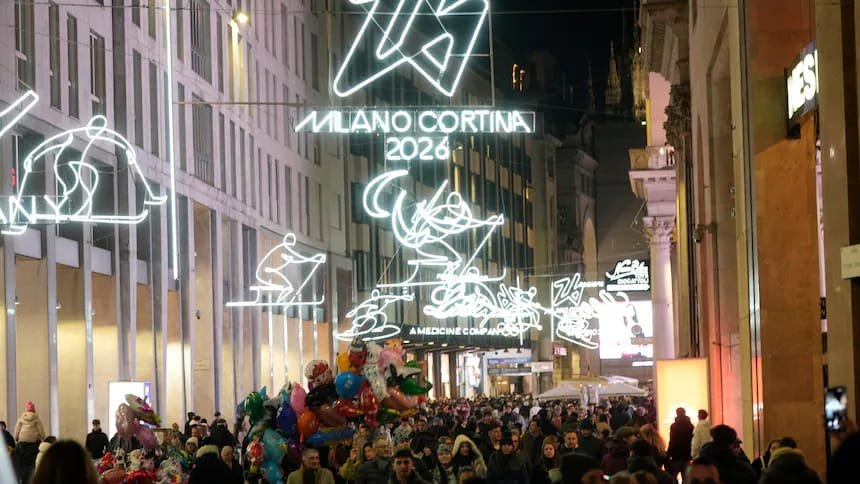
As preparations for Italy’s next Olympic moment continue with little fanfare, a separate incident in Milan has drawn the city’s attention inward—toward the quiet, everyday spaces where life, and loss, can unfold.
The Incident
On a winter afternoon in Milan, emergency sirens cut through a neighborhood otherwise absorbed in its routines. In a residential high-rise, a young child suffered a serious fall from an upper-floor apartment, an incident that unfolded in minutes but left a lasting mark on the building’s residents and the wider community.
First responders arrived swiftly. Neighbors watched from balconies and stairwells, many holding their breath, others holding each other. Officials later confirmed that the child was transported to hospital, and while details were limited out of respect for the family, the gravity of the situation was unmistakable.
It was not an event tied to sport, celebration, or ceremony. Yet, in a city preparing to co-host the Olympic Games, it became a sobering counterpoint to the otherwise muted countdown toward 2026.
Location & Context
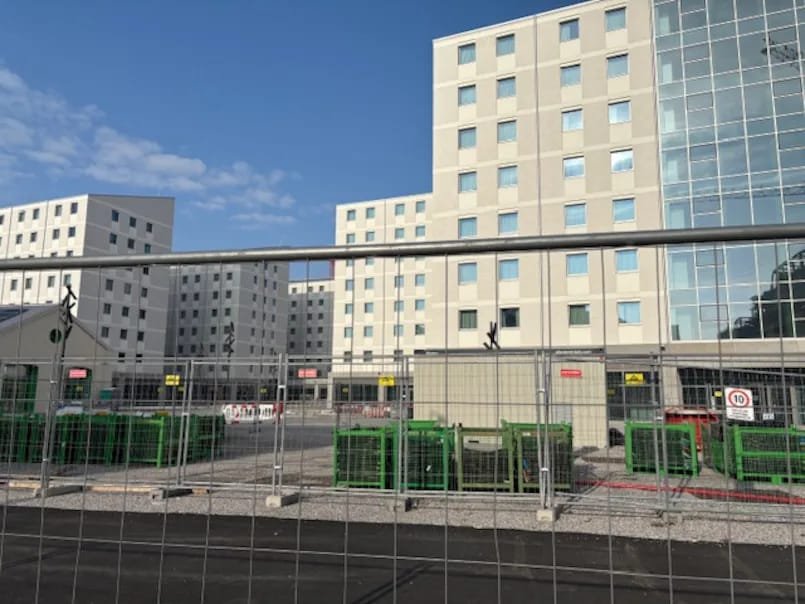
The incident occurred in a dense residential district of Milan, where high-rise living is a practical reality for thousands of families. These buildings—efficient, vertical communities—are home to children who grow up surrounded by concrete courtyards, narrow balconies, and windows that open onto long drops.
At the same time, Milan is living in an unusual calm ahead of Milano Cortina 2026. With a month marking a symbolic milestone before the Olympic year begins in earnest, there has been little of the expected spectacle. Construction continues, plans advance, but daily life remains dominant—school runs, work commutes, and ordinary afternoons like the one interrupted by sirens.
What Is Known So Far
Authorities have described the incident as accidental. There is no indication of criminal wrongdoing, and investigators have focused on understanding how the fall occurred, including the design of the apartment’s safety features and whether protective barriers were in place.
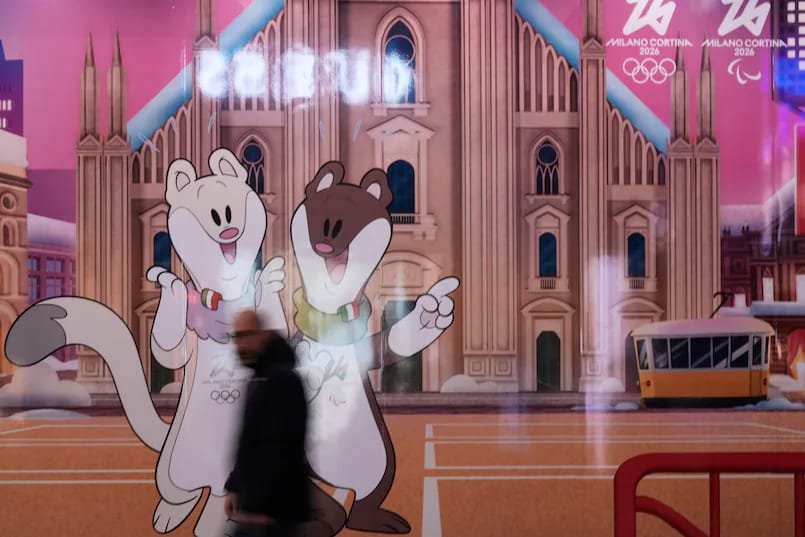
Officials have been careful to emphasize privacy, particularly given the child’s age. What is clear is that the incident has reignited concerns long familiar to urban safety experts: the risks posed by balconies and windows in high-rise buildings, especially where young children live and play.
Broader Reflections
In cities like Milan, vertical living is not a choice but a norm. Families adapt, often trusting that modern buildings are inherently safe. Yet tragedies and near-tragedies repeatedly expose how small oversights—a chair left near a railing, a window without a lock—can have devastating consequences.
As Milan looks ahead to welcoming the world for the Olympics, the contrast is stark. Global events demand grand visions and massive coordination, but they also exist alongside fragile, private moments where safety depends on everyday vigilance rather than institutional planning.
Community Reaction
In the days following the incident, residents left flowers and small notes near the building’s entrance. Parents in the neighborhood spoke quietly to one another about balcony nets, window guards, and the constant calculations of risk that come with raising children in tight urban spaces.
Local parent groups and housing associations have renewed calls for clearer safety guidelines and better communication from building managers. The mood is not accusatory, but reflective—marked by a shared understanding that anyone could be in that family’s place.
The Road Ahead
Milano Cortina 2026 will arrive with its ceremonies, athletes, and global attention. Milan will shine, as it often does, on the international stage. But the city’s true measure lies just as much in how it protects its youngest residents as in how it hosts the world.
The recent incident serves as a quiet reminder that progress is not only about infrastructure and events, but about care—about noticing hazards before they become headlines, and about extending compassion when ordinary days turn suddenly fragile.
In the end, vigilance is not a grand gesture. It is a series of small, human acts, repeated daily, that keep communities safe and connected—even as the world prepares to watch.


Hey guys, tried k99game the other day. Pretty standard stuff, y’know? But the bonuses are alright, could be worse. Give it a look if you’re bored. k99game