









The Incident
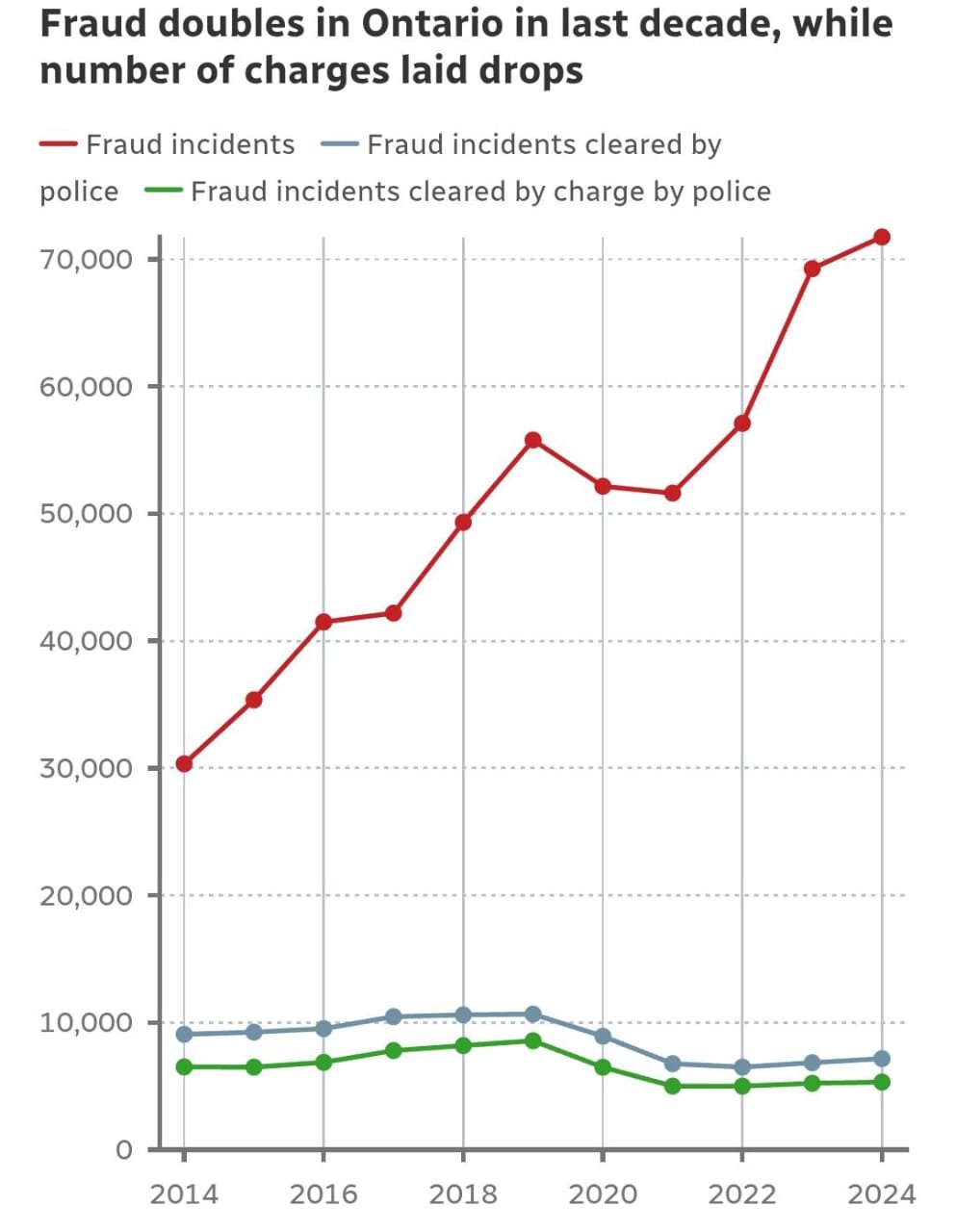
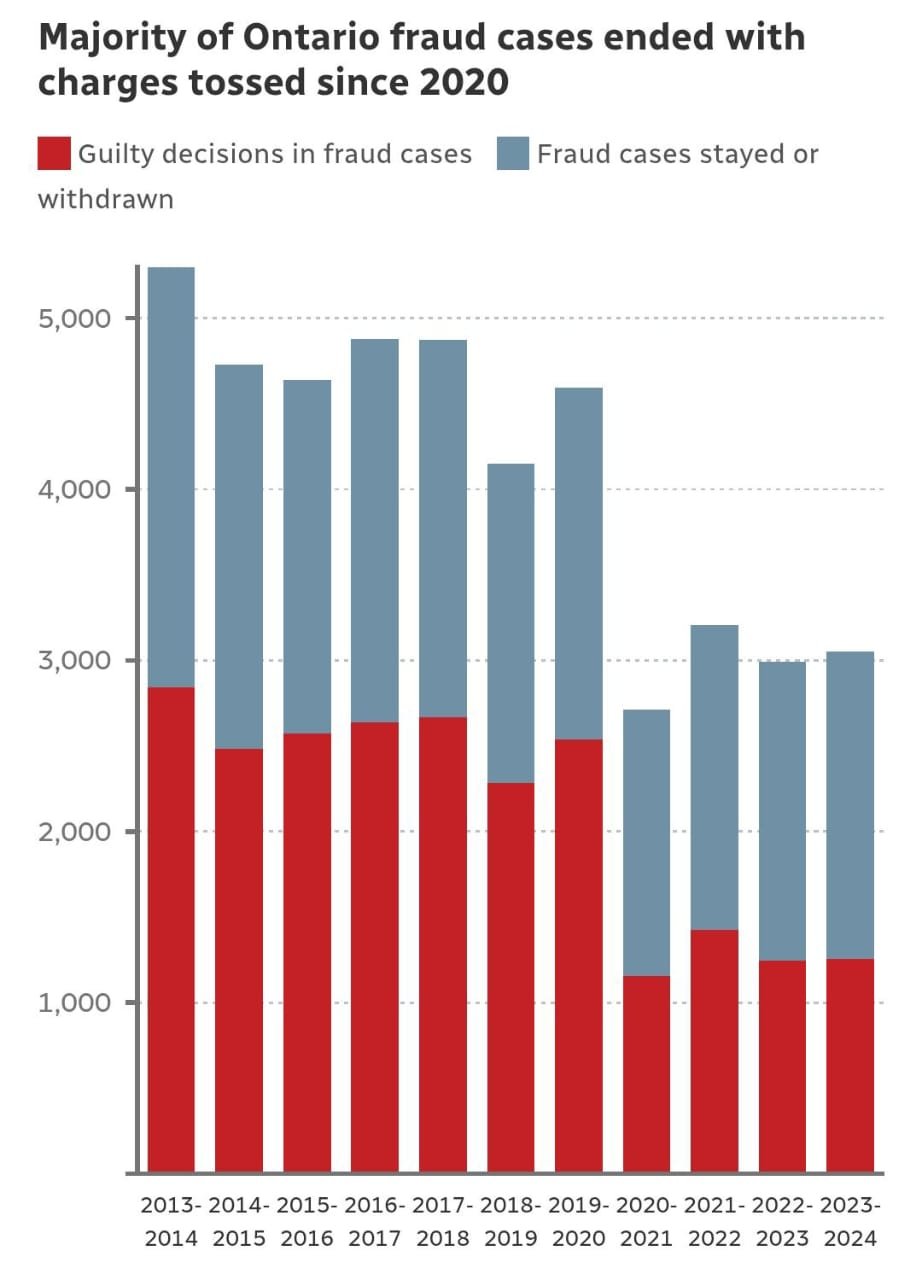
They called it fraud — tens of thousands of reports every year across Ontario, Canada. Yet for a growing number of victims, justice never arrived. According to the Ontario Crown Attorneys’ Association (the “Crowns’ Association”), since 2020, most fraud cases in the province have ended not in conviction, but in dismissal — charges stayed or withdrawn, not tested in trial.
For people who trusted banks, companies or officials — people who lost savings, retirement funds, or life’s security — the dismissal of charges represents a painful empty verdict. The law recognized their case as valid enough to arrest, but the system lacked the resources to see it through.

Location & Context
Ontario, the most populous province in Canada, has long been a hub of immigration, commerce, and opportunity — but also vulnerability. As financial transactions become more complex — online banking, digital transfers, cryptic paperwork — opportunities for fraud multiply. Simultaneously, the COVID-19 pandemic stretched the courts thin, creating massive backlogs.
The Crowns’ Association says the justice system, burdened by understaffing and an overload of complicated cases, has been forced to triage — giving priority to violent and time-sensitive crimes like sexual assault or homicide, rather than financial wrongdoing.
As fraud reports surged — in 2024, more than 71,700 incidents were recorded, more than double the number from a decade earlier — the courts were inundated. But police laid charges in fewer than 10 percent of those reports; and of the charges laid, more than half were eventually dropped.
What Is Known So Far
In the fiscal year 2023–2024, 58 per cent of fraud cases ended with charges stayed or withdrawn, compared with about 46 per cent a decade ago.
Many of the dropped cases are not due to lack of evidence or innocence — prosecutors simply lack the time, technical staff and specialized expertise to build complex fraud trials.

Crowns are routinely in court four to five days a week; faced with hundreds of cases, many are forced to withdraw rather than risk delay on more urgent criminal trials.
The provincial government has announced plans to invest hundreds of millions of dollars by 2027–2028: new judges, more prosecutors, expanded support staff — a bid to relieve backlogs and restore confidence in the justice system.
Despite these promises, for thousands of Canadians the wait has already taken its toll.
Broader Reflections
When justice fails not because of innocence, but because of inertia, the consequences ripple beyond individual victims — they erode trust in institutions. Fraud is not a victimless crime. Money lost, livelihoods ruined, families destabilized. The fact that these cases so often go unresolved sends a message: financial wrongdoing is less dangerous — and less punishable — than violent acts.
In a society that prides itself on fairness and accountability, that message undermines the foundation of trust. It suggests that when crimes are complicated, when money is involved, even when people are harmed, the system may quietly look away.
This is especially troubling at a time when communities increasingly rely on digital and remote systems — online banking, remote investments, elderly savings deposited electronically, support payments going into accounts rather than passing hands. Vulnerable people — seniors, immigrants, working-class families — who may not understand the complexities of a fraud case are the ones most likely to be left dangling, empty-handed.
Community Reaction
In towns and neighborhoods across Ontario, whispers of disappointment, anger, betrayal. Victims who filed police reports — often after months of painstaking documentation, bank statements, emails — were told the Crown dropped their case. Some were offered no meaningful explanation beyond “lack of resources.”
One person, speaking anonymously, told media: “I filed the report when I found out my parents’ retirement fund had vanished. I expected an investigation. Instead I got a form letter saying charges were withdrawn. I lost everything, and no one seems to care.”
Advocacy groups and expert voices have criticized the justice system’s de-prioritization of financial crime. “If it bleeds it leads,” said one fraud-victim consultant. The public — people who counted on their government to protect them — feel abandoned.
Even within the legal community, there’s unease. Some prosecutors warn this resource-driven triage compromises the principle that every crime deserves attention, not just the most sensational.
The Road Ahead
The government’s commitment to add judges, Crown prosecutors, court-staff and victim-support workers by 2027–2028 offers hope. A newly bolstered Ontario’s Serious Fraud Office is intended to bring together law enforcement and prosecutors — a unified, organized approach to serious fraud.
But rebuilding trust will take more than resources. It will require a shift in priorities: acknowledging that financial crimes — large or small — inflict real harm. Offering support for victims, transparent reporting, perhaps even community-level awareness programmes about fraud risks.
Only then can the system begin to restore faith in its own fairness.
In the end, this crisis is not just about numbers or budgets. It is about people whose lives have been upended by betrayal — betrayed not only by perpetrators, but by a system that said “not enough resources” when they asked for justice. It is a reminder: vigilance matters. Not just in daily transactions, but in ensuring that institutions meant to protect all of us have the strength and will to stand up — even when it’s hard.
https://amarsonpost.com/kremlin-says-trumps-new-security-strategy-aligns-with-russian-interests/
Because when justice falters, it’s everyday people who pay the price.




One thought on “Majority of Ontario Fraud Cases Tossed Since 2020 Due to Limited Resources: Crowns’ Association”