








Gaza Bleeds While Leaders Meet
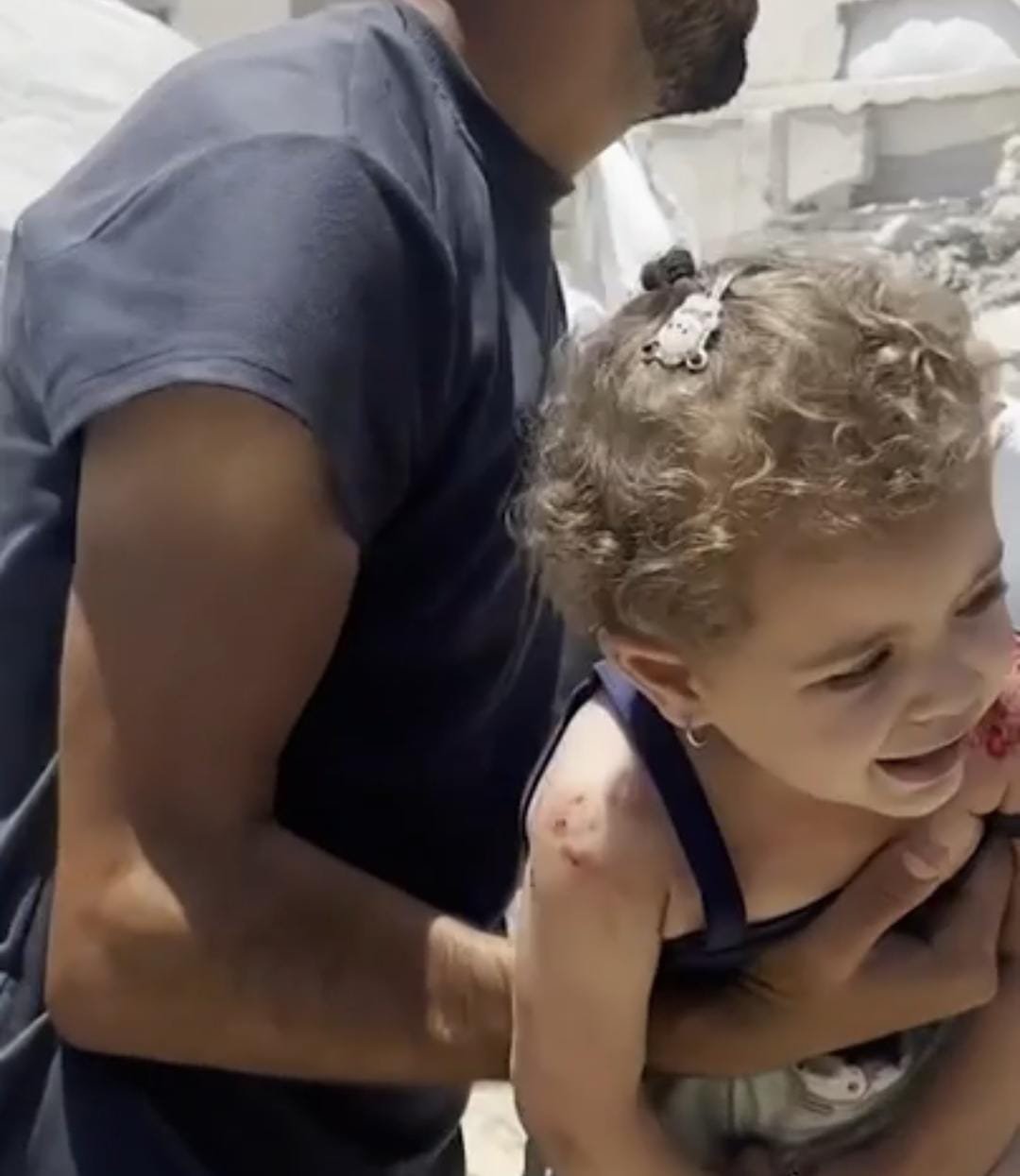
As Gaza reels from relentless Israeli airstrikes, reports confirmed that at least 95 Palestinians, including women and children, have been killed in the latest surge of violence. The deadly attacks coincided with a highly publicized meeting between U.S. presidential candidate Donald Trump and Israeli Prime Minister Benjamin Netanyahu, sparking outrage and raising grave concerns over the rapidly deteriorating humanitarian crisis.
While the two leaders exchanged handshakes and political assurances, the scenes unfolding in Gaza were starkly different—families pulling loved ones from beneath rubble, smoke billowing from residential neighborhoods, and hospitals overwhelmed with wounded civilians.
Civilians Pay the Heaviest Price
The strikes began overnight, targeting what Israel described as “Hamas command centers,” but as is often the case in Gaza’s densely packed urban areas, the civilian toll mounted quickly. Apartment blocks were reduced to rubble, marketplaces were struck during peak hours, and entire families were wiped out in seconds.
Witnesses described scenes of horror. “I was sitting with my family when the building shook violently. Seconds later, the entire street was covered in dust and screams,” said Ahmad al-Sheikh, a Gaza resident.
Local hospitals, already battered by shortages of medicines and fuel due to the ongoing blockade, were inundated with casualties. Doctors were forced to treat patients on the floor as operating rooms overflowed.
“We are dealing with an unimaginable catastrophe,” said Dr. Hani al-Qassas, a surgeon in Gaza’s largest hospital. “Many of the injured are children. We simply don’t have the resources to handle this.”
Israel Defends Airstrikes, Citing Security Threats
Israel’s military issued statements defending the airstrikes as a necessary response to rocket fire from Gaza into southern Israeli cities. Netanyahu insisted that Israel had “no choice” but to act.
“We will not tolerate attacks on our civilians,” Netanyahu said during a press conference following his meeting with Trump. “Hamas is solely responsible for this escalation.”
The Israeli military claimed to have targeted weapons caches and militant infrastructure, but international observers have questioned the proportionality of the attacks, especially given the high civilian death toll.

Trump and Netanyahu: A Controversial Alliance Amid Bloodshed
The meeting between Trump and Netanyahu, which was initially framed as a strategic discussion on Middle East security, quickly became engulfed in controversy due to the timing.
Trump reiterated his unwavering support for Israel during the summit, calling Netanyahu “a great leader who protects his people.” He further pledged continued U.S. military aid to Israel, saying, “America stands with Israel, now and always.”
However, critics accused both leaders of cynically using the Gaza crisis to bolster their political images. Trump, who is campaigning for a return to the White House, has frequently portrayed himself as a staunch ally of Israel to appeal to his political base. Netanyahu, facing growing domestic dissent and corruption allegations, has often leaned on conflict with Gaza to rally nationalist support.
Former diplomats and analysts condemned the meeting as politically opportunistic and tone-deaf
“While Gaza is bombarded, these two men are smiling for cameras and discussing political deals,” said Aaron David Miller, a veteran U.S. Middle East negotiator. “It’s obscene.”
International Backlash and Global Protests
The scenes from Gaza have triggered a wave of anger across the world. Protests erupted in cities such as London, Berlin, Istanbul, and Jakarta, with demonstrators carrying Palestinian flags and chanting slogans against Israel and its Western backers.
In Washington, D.C., hundreds gathered outside the White House, demanding an immediate ceasefire and an end to U.S. military aid to Israel.
Human rights organizations have also issued scathing condemnations. Amnesty International called Israel’s actions “a clear violation of international law,” and accused both Israeli leaders and Palestinian armed groups of committing war crimes.
“The indiscriminate bombardment of civilian areas must stop immediately,” said Agnès Callamard, Amnesty’s Secretary General. “There must be accountability for these atrocities.”
The United Nations convened an emergency session, with Secretary-General António Guterres warning of a “catastrophic humanitarian disaster” and calling for both sides to exercise restraint.
Despite global appeals, Netanyahu signaled no intention of halting the military campaign, stating Israel would “continue operations until its objectives are achieved.”

Humanitarian Crisis Worsens in Gaza
The violence has plunged Gaza’s already fragile humanitarian situation into deeper crisis. More than 15,000 people have been displaced, seeking shelter in overcrowded UN schools and hospitals.
The destruction of key infrastructure—including water treatment plants, electricity lines, and medical centers—has left thousands without basic services. Entire neighborhoods remain cut off from aid due to ongoing strikes.
“The situation is dire beyond imagination,” said Philippe Lazzarini, head of UNRWA, the UN agency supporting Palestinian refugees. “Gaza is on the verge of total collapse.”
Aid organizations warned that without immediate humanitarian corridors, the death toll would climb even further—not only from airstrikes but also from lack of medical care, water, and food.
Rising Fears of Regional Conflagration
Beyond Gaza, the violence threatens to trigger a broader regional conflict. Armed groups in Lebanon and Syria have expressed solidarity with Gaza and warned of retaliation. In southern Lebanon, rocket fire was reported near Israeli positions, raising fears of a second front opening along Israel’s northern border.
Iran, a key backer of Hamas and Hezbollah, also condemned the Israeli strikes, warning that continued aggression could lead to “uncontrollable consequences.”
Regional experts warn that the longer the conflict continues, the more likely it is to draw in other actors.
“This isn’t just about Gaza anymore,” said Maha Yahya, director of the Carnegie Middle East Center. “It’s about the entire region’s stability.”

Calls for Accountability and Lasting Solutions
In the face of growing bloodshed, calls for justice and accountability are intensifying. Activists, scholars, and humanitarian organizations are urging world leaders to pressure Israel to halt its military campaign and commit to serious peace efforts.
Palestinian Authority President Mahmoud Abbas denounced the Israeli offensive as “genocide” and called for immediate international intervention.
“Silence in the face of these crimes makes the world complicit,” Abbas declared.
However, with the U.S. continuing to shield Israel from international sanctions, many Palestinians fear that Gaza will once again be left to suffer without meaningful consequences for those responsible.

A Tragic Cycle Repeats
For many in Gaza, this latest escalation feels like a grim repetition of past wars—in 2008, 2012, 2014, and 2021—all of which left deep scars but resolved nothing.
“We have lived through this too many times,” said Nour al-Masri, a mother of three in Gaza. “The world watches, they talk, and then we are left to bury our dead.”
As the dust settles on yet another day of war, one truth remains: the human cost of this conflict is unbearable, and without urgent international action, Gaza risks becoming a permanent graveyard of hope.

One thought on “Israel Kills 95 Palestinians in Gaza as Trump and Netanyahu Hold High-Stakes Meeting Amid Escalating Violence”