









A Ceremony That Refused to Be Ordinary
The 2026 edition of the Juno Awards of 2026 was not just another industry ritual—it was a cultural statement. At a time when award shows globally are struggling for relevance, this ceremony did something radical: it embraced legacy, authenticity, and continuity over fleeting virality.
In an era dominated by algorithm-driven hits, the Junos made a bold argument—music history still matters. And more importantly, it shapes the future.
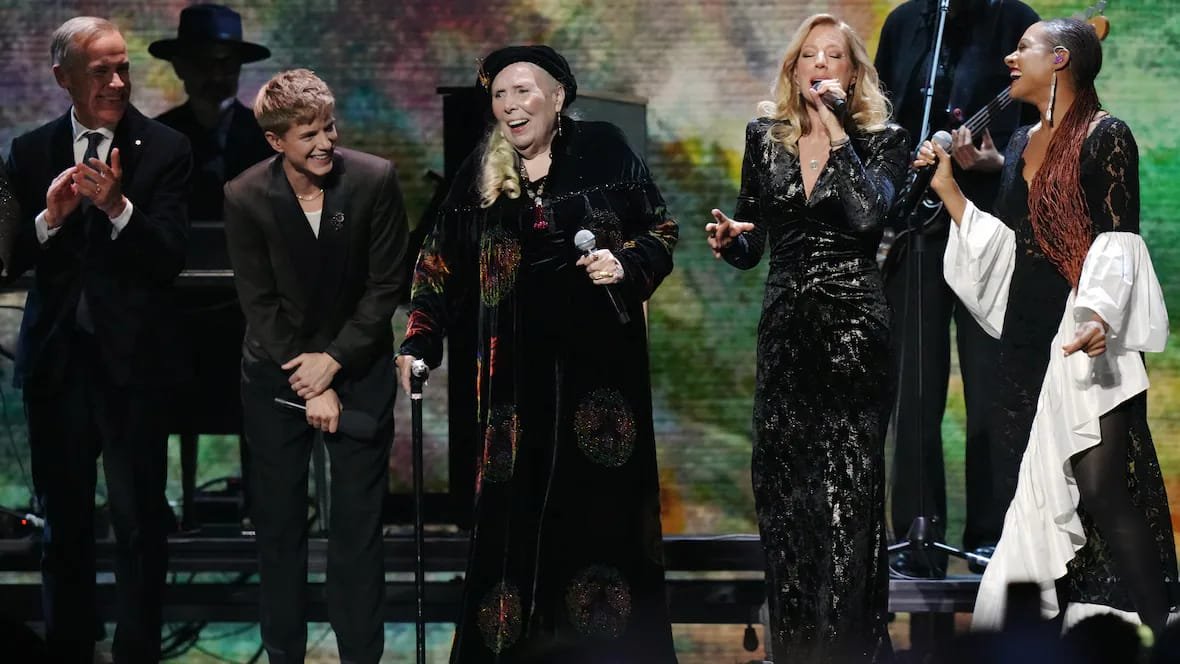
Joni Mitchell: The Triumph of Art Over Time
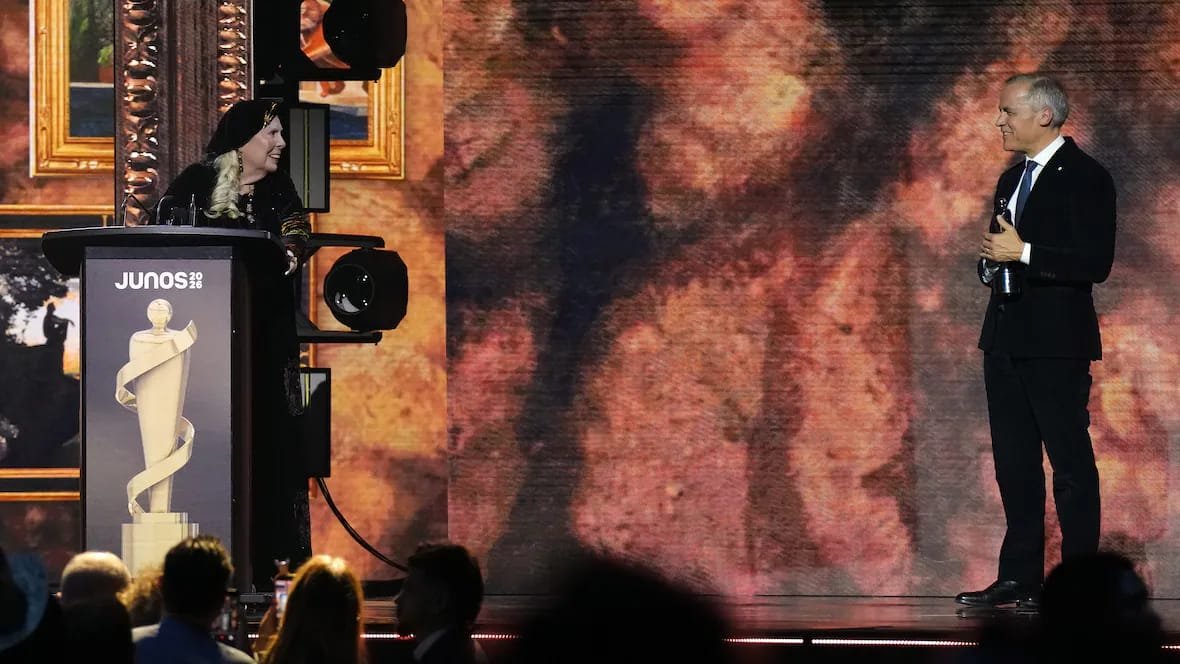
The emotional centerpiece of the night was the honoring of Joni Mitchell with a Lifetime Achievement Award. But framing this moment as mere recognition would be an understatement—it was a cultural correction.
Mitchell’s return to the stage after years of health struggles and limited public appearances carried symbolic weight. Following a life-altering aneurysm and a long recovery, her presence alone challenged the industry’s obsession with youth and immediacy.
Her performance wasn’t just nostalgic—it was defiant. It reminded audiences that longevity in music is not accidental; it is earned through depth, reinvention, and emotional truth. In a world where artists are often discarded after a few chart cycles, Mitchell’s standing ovation was a rebuke to disposability.
Real-world relevance: Industries beyond music—tech, media, even academia—face the same problem of undervaluing experience. Mitchell’s moment is proof that mastery, not trendiness, creates lasting impact.
Rush: Legacy Isn’t Static—It Evolves
Then came the seismic return of Rush. Their surprise performance—marking their first live appearance since 2015—was more than fan service; it was a lesson.
Performing after the loss of legendary drummer Neil Peart, the band demonstrated that legacy acts don’t have to be frozen in time. By introducing a new drummer and revisiting their earliest work, Rush showed that honoring the past doesn’t mean being trapped by it.
This is where the Junos outperformed many global award shows: it didn’t treat legacy artists as museum exhibits. It treated them as living, evolving forces.
Logical takeaway: Reinvention is not the enemy of authenticity—it is its extension. Rush’s performance proves that continuity and change can coexist.
The Beaches: A New Era, Earned Not Manufactured
While legends dominated headlines, the real structural shift came from The Beaches. Their third consecutive win for Group of the Year—an unprecedented achievement for an all-women band—signals something deeper than success. �
stereogum.com +1
This wasn’t a token victory driven by industry optics. It was a sustained, multi-year dominance. That distinction matters.
In an industry often criticized for performative inclusivity, The Beaches represent a different model: credibility built through consistency. Their win suggests that the conversation is finally moving from representation as a gesture to representation as a result.
Real-world parallel: True progress in any field—whether corporate leadership or sports—occurs when underrepresented groups don’t just appear, but dominate repeatedly.
The Bigger Picture: A Rebalance of Music Culture
The most striking aspect of the night was not any single award or performance—it was the coexistence of eras.
A veteran like Joni Mitchell redefining longevity
A legendary band like Rush redefining comeback
A modern act like The Beaches redefining success
This triangulation created something rare: a sense of continuity in an otherwise fragmented music ecosystem.
Compare this to many global award shows that chase viral moments at the cost of coherence. The Junos did the opposite—it built a narrative. And that narrative was clear: music is not a sequence of trends; it is an evolving conversation across generations.
Final Verdict: A Blueprint, Not Just a Celebration
The 2026 Junos should not be remembered as a “great night”—that would be too small. It should be studied as a blueprint.
By placing legacy, resilience, and merit on equal footing, the event challenged the industry’s short-term thinking. It proved that honoring the past doesn’t dilute the present—it strengthens it.
The real takeaway is uncomfortable but necessary:
If an award show cannot connect generations, it is not celebrating music—it is merely marketing it.
The Junos chose celebration. And that made all the difference.