







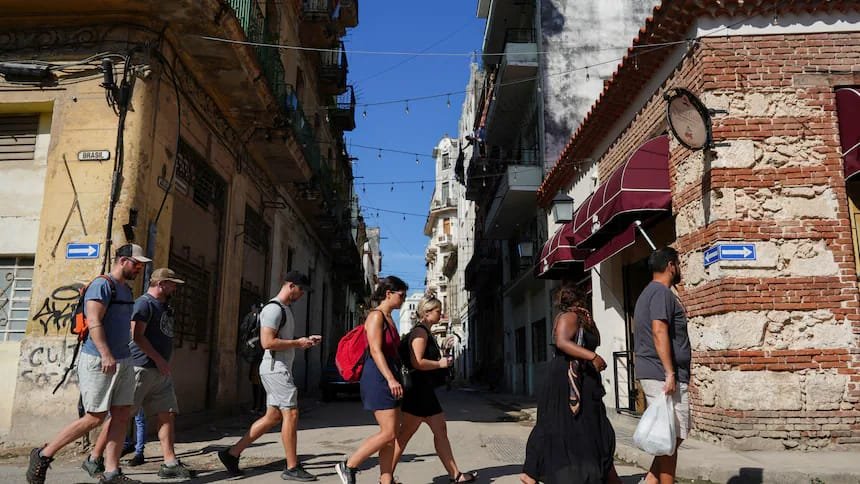
For decades, tourism has been Cuba’s economic locomotive — the sector that kept foreign currency flowing when other industries stalled. Beach resorts in Varadero, colonial streets in Havana, and cruise ships docking along the Malecón once symbolized resilience. But today, the engine that powered the island’s survival strategy is sputtering. The question is no longer whether Cuba’s tourism sector is struggling. It is whether the country has over-relied on a model that was always too fragile to endure.
The Illusion of Stability
Cuba built its modern economy on tourism out of necessity. After the collapse of the Soviet Union, the island faced a devastating economic crisis. Opening the country to international visitors was a pragmatic pivot. Resorts expanded, foreign hotel brands partnered with the state, and tourism became one of the primary sources of hard currency.
On the surface, the model worked. Resorts filled with European and Canadian tourists. All-inclusive packages flourished. But beneath the glossy brochures lay a vulnerability: tourism is inherently volatile. It depends on global stability, geopolitical relations, airline connectivity, consumer confidence, and perceptions of safety.
When global shocks hit — from tightened U.S. sanctions to the COVID-19 pandemic — Cuba’s economy had no cushion. A nation cannot anchor its financial survival to an industry that evaporates during global crises.
Sanctions, Politics, and the Cost of Isolation
Tourism does not operate in a vacuum. It reflects political realities. Restrictions from the United States, shifting travel policies, and financial limitations have repeatedly disrupted flows of visitors. Cruise lines halted operations. Direct flights fluctuated. Payment systems became complicated.
While other Caribbean nations diversified their tourism markets and modernized infrastructure, Cuba’s political isolation amplified every disruption. The island’s economic model relies heavily on centralized control, which often slows adaptation. In an era when travelers demand digital convenience, flexible booking, and seamless payments, outdated systems are more than inconveniences — they are competitive disadvantages.
The global tourism market is ruthless. Sentiment shifts quickly, and alternatives are plentiful. The Dominican Republic, Mexico, and other Caribbean destinations aggressively court visitors with investment-friendly policies and private-sector innovation. Cuba’s comparative advantage — its uniqueness — is no longer enough.
Infrastructure Decay and Domestic Strain
Tourism thrives on reliability: electricity, food supply, transportation, and hospitality services must function smoothly. But Cuba has faced recurring blackouts, supply shortages, and inflationary pressures. When residents struggle with daily necessities, sustaining a polished tourism experience becomes increasingly difficult.
There is also a deeper tension. The dual economy — one catering to tourists with better resources, the other serving citizens with shortages — creates visible inequality. That imbalance breeds frustration domestically and awkward optics internationally. Travelers notice when local populations endure scarcity while resorts maintain relative abundance.
An economy cannot sustainably privilege visitors over citizens. Eventually, the imbalance undermines both.
The Pandemic Was Not the Cause — It Was the Catalyst
It is tempting to blame COVID-19 for Cuba’s tourism downturn. The pandemic devastated travel worldwide. But for Cuba, the crisis exposed structural fragility rather than creating it.
Countries with diversified economies rebounded more swiftly. Those that invested in digital marketing, diversified source markets, and strengthened domestic tourism ecosystems adapted. Cuba, constrained by currency shortages and bureaucratic rigidity, struggled to pivot.
The pandemic did not derail a healthy train. It revealed that the tracks were already unstable.
Overdependence Is Not Development
The deeper issue is philosophical: tourism was treated as development rather than as one component of development. Building hotels does not automatically build productivity. Attracting visitors does not necessarily create sustainable wealth if profits leak outward or remain concentrated in state-controlled channels.
A healthy economy balances tourism with manufacturing, agriculture, technology, and entrepreneurship. Overdependence on a single service sector exposes a country to external forces it cannot control. Weather events, airline bankruptcies, geopolitical tensions — any one of these can slash revenues overnight.
Cuba’s tourism engine is derailing because it was expected to pull too many carriages alone.
The Untapped Potential of the Cuban People
Perhaps the most overlooked factor is Cuba’s human capital. The country boasts a highly educated population, strong healthcare training, and cultural richness. Yet private enterprise remains limited, and innovation faces regulatory barriers.
Tourism could have been a platform for broader entrepreneurial ecosystems — local tech services, culinary industries, cultural exports, creative industries. Instead, centralization has often restricted organic growth. When small businesses flourish, tourism dollars circulate more effectively within the local economy. When control is tight, dynamism suffers.
The future lies not in more hotel rooms but in more economic freedom.
A Crossroads Moment
Cuba stands at a decisive juncture. The tourism sector can either continue as a fragile lifeline or evolve into part of a diversified, modern economy. Reform does not mean abandoning sovereignty; it means recognizing economic realities.
Global travelers are returning — but they are choosier, more digitally connected, and more value-driven than ever. Competing in that environment requires infrastructure reform, financial modernization, regulatory flexibility, and genuine private-sector participation.
Without structural change, tourism will remain an unreliable engine. With reform, it could become a stabilizing contributor rather than a desperate dependency.
Conclusion: Rebuilding the Tracks
The metaphor of a derailing train is powerful because it implies motion interrupted — not permanent collapse. Cuba’s tourism industry is not beyond recovery. But restoring momentum requires rebuilding the tracks beneath it.
Economic resilience comes from diversification, adaptability, and empowering citizens as participants — not spectators — in growth. Tourism once saved Cuba in a moment of crisis. Now, clinging to it as a singular solution may prolong the very instability it was meant to prevent.
The locomotive can run again. But it cannot pull the entire nation by itself.