






This Isn’t Just a Mission — It’s a Strategic Reset
The upcoming Artemis II is often framed as a symbolic return to the Moon. That interpretation misses the bigger picture. Artemis II is not about nostalgia—it is about recalibrating humanity’s long-term presence in space. Unlike the Apollo program, which was driven by geopolitical urgency, Artemis represents a deliberate, sustainable, and economically motivated expansion beyond Earth.
This mission signals a shift from “flags and footprints” to infrastructure and permanence. In practical terms, Artemis II is less about where we go, and more about whether we can stay.
Why Artemis II Matters More Than Its Predecessors
It may seem counterintuitive, but Artemis II could be more consequential than even Apollo 11. Apollo proved we could reach the Moon. Artemis must prove we can build a repeatable system to go back—and keep going.
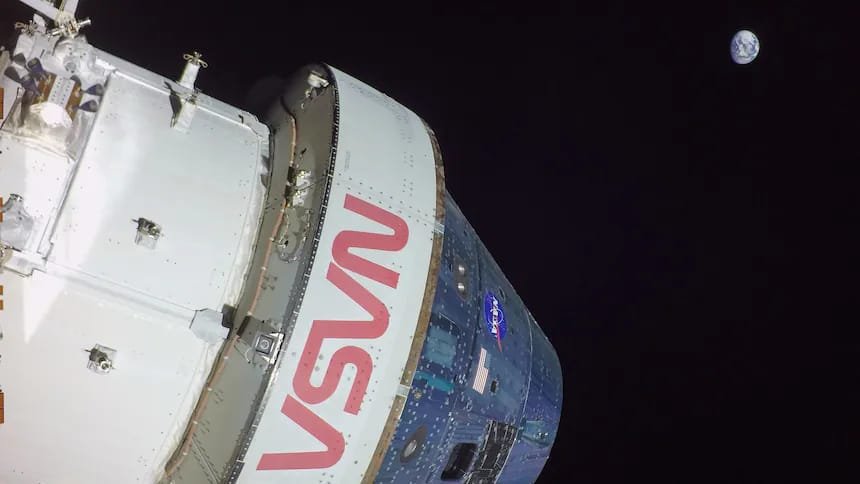
The use of the Orion spacecraft and Space Launch System is not just about capability; it’s about reliability. These systems must function not once, but consistently, under deep-space conditions. A single successful mission is impressive. A repeatable system is transformative.
In this sense, Artemis II is a stress test for the future of human spaceflight. If it fails, timelines for lunar bases and Mars missions will slip dramatically. If it succeeds, it unlocks an entirely new phase of exploration.
The Real Story: Collaboration Over Competition
One of the most underappreciated aspects of Artemis II is its international and inclusive nature. The inclusion of Jeremy Hansen alongside NASA astronauts reflects a deliberate move toward global cooperation.
This is not accidental—it’s strategic. Space exploration has evolved from a Cold War competition into a shared global enterprise. Programs like Artemis are too complex and expensive for any single nation to sustain alone. By distributing expertise, cost, and risk, agencies increase both resilience and innovation.
In a world fractured by geopolitical tensions, Artemis offers a rare counter-narrative: progress through partnership. That may ultimately be its most enduring legacy.
Lunar Return Is Really About Earth
Critics often question the value of returning to the Moon. Why invest billions in lunar missions when Earth faces urgent challenges?
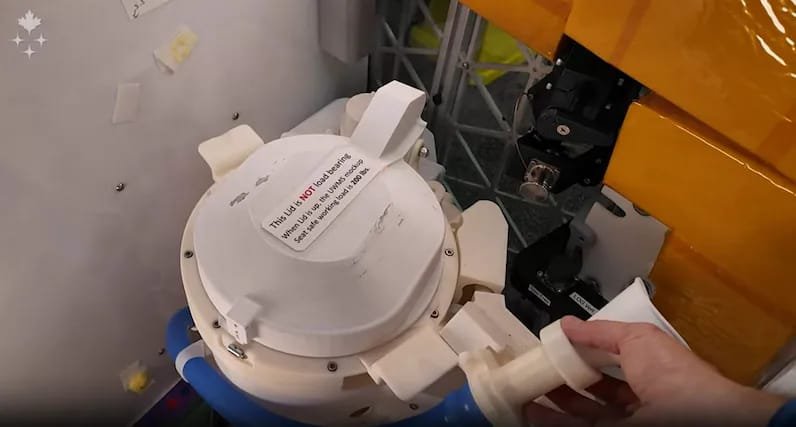
The answer lies in dual-use innovation. Technologies developed for Artemis—advanced life support systems, energy storage, autonomous operations—have direct applications on Earth. More importantly, the Moon serves as a proving ground for solving extreme-environment problems.
Consider resource utilization. Learning to extract water ice from the Moon’s surface could revolutionize how we think about sustainability in resource-scarce environments on Earth. Similarly, closed-loop life support systems developed for space habitats could reshape urban sustainability models.
In short, Artemis is not an escape plan—it’s a laboratory for Earth’s future.
What Comes Next Will Define the Mission’s Legacy
The true measure of Artemis II will not be the mission itself, but what follows. The success of Artemis III and the development of the Lunar Gateway will determine whether Artemis becomes a sustained program or another historical milestone.
There is also a broader implication: momentum. Space programs thrive on continuity. Gaps between missions erode political will, funding, and public interest. Artemis II must not only succeed technically—it must maintain urgency.
If NASA and its partners capitalize on this moment, we could see the emergence of a permanent human presence beyond Earth within decades. If they don’t, Artemis risks becoming another chapter in a stop-start history of space exploration.
A Defining Test of Human Intent
Ultimately, Artemis II is a test—not of technology, but of intent. Do we, as a species, truly commit to becoming multi-planetary, or do we remain bound by short-term thinking and terrestrial priorities?
The mission forces a choice. Either we treat space as an extension of human civilization, worthy of sustained investment and vision, or we relegate it to symbolic achievements.
Artemis II suggests we are choosing the former. The real question is whether we will follow through.