








The Incident
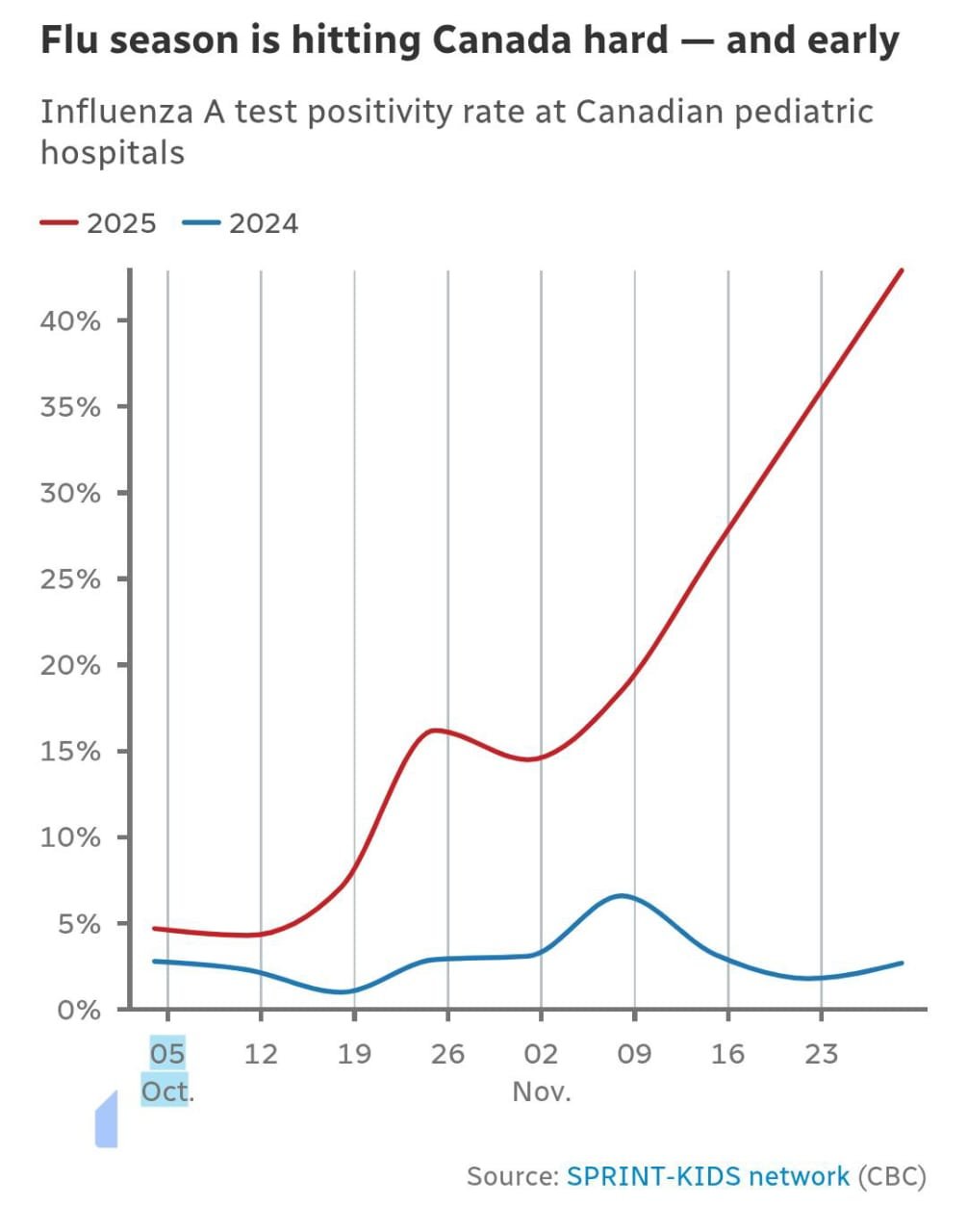
Across Canada, children’s hospitals are seeing dramatic surges in flu cases — far beyond what would be expected at this time of year. At Children’s Hospital of Eastern Ontario (CHEO), in Ottawa, November’s flu-positive cases among children shot up to eight times the number recorded in the same month last year. Hospital admissions for influenza doubled compared to 2024. On a single recent Monday, nearly 300 young patients passed through the emergency department, a roughly 20 percent increase from last year.
Meanwhile, other pediatric hospitals in Ontario and Quebec — such as Montreal Children’s Hospital — are similarly overwhelmed. There, emergency departments report more than 200 children coming in per day, many with influenza A. In some cases, children are arriving with high fevers, prolonged coughs, and flu-like symptoms severe enough to require hospitalization.
For many families, the surge has turned the flu from a seasonal nuisance into an urgent medical crisis.
Location & Context
The spike is unfolding across several provinces, but the pressure is especially acute in Ontario and Quebec. CHEO, serving Ottawa and surrounding eastern-Ontario communities, is among the hardest hit. In Montreal, the pediatric emergency department at the Montreal Children’s Hospital is running at high capacity.
Public-health data indicate that this flu season has arrived earlier and more forcefully than usual. Hospitals across Canada are reporting increased volume of pediatric respiratory illnesses, with influenza appearing more frequently than other common viruses among children and teens. The increase comes at a time when many families may have delayed or skipped this year’s flu vaccine — a factor hospital staff point out as especially concerning.
In a year when a dominant influenza strain (noted by health professionals as more aggressive than typical) is circulating, and when many children remain unvaccinated, the convergence has placed unprecedented stress on pediatric healthcare facilities.
What Is Known So Far
At CHEO, November 2025 saw eight times more children test positive for influenza compared to November 2024. Hospitalizations for pediatric flu more than doubled. Most of those admitted had not received the seasonal flu vaccine.
Emergency-department volumes are so high that hospitals have begun to rely on overflow spaces to care for the growing number of patients. Staff warn that the worst may still be ahead, with public-health forecasts projecting a peak in late December.
In Montreal, pediatric emergency-department staff report 12–15 new registrations per hour during peak periods — a rate that exceeds their typical capacity. Many of those children test positive for influenza A.
Pediatricians across Canada emphasize that although the current flu vaccine may not be a perfect match for the dominant strain, it still offers significant protection against severe disease and hospitalization.
Doctors are issuing a united call: get vaccinated, especially if you have children or care for them.
Broader Reflections
This surge highlights stark truths about child safety, public health, and the unpredictable nature of infectious disease. Flu is often dismissed as a mild inconvenience — “just a bad cold,” many parents think. But this year’s data show how quickly a virus can overwhelm children’s health and the fragile balance of hospital capacity.
Especially where children live in dense housing, attend schools, or have limited access to healthcare, the risk multiplies. A single unprotected child — one without a vaccine — can, through routine school or community contact, become part of a chain that endangers dozens.
Moreover, the pressure on hospitals underlines systemic vulnerabilities: limited pediatric beds, strained emergency departments, and a workforce stretched thin in the face of rising demand.
Community Reaction
Across social media and parent networks, anxiety has spiked. Some parents express frustration and guilt — guilt over missed vaccination appointments, guilt over sending mildly unwell kids to school, guilt over possibly contributing to the spread. Others are angry: at mixed messaging, at busy schedules, or at the difficulty of booking timely flu-shots.
One parent quoted in a public forum wrote:
> “We learned nothing from COVID… If your kid is sick, keep your kid home.”
Another admitted relief that their child had received the vaccine — but sorrow that many others had not.
There is also solidarity: communities offering to share reliable resources, volunteers helping arrange flu-shot drives, neighbors checking on elderly residents who are also vulnerable, and families offering childcare support when others must isolate.

But underlying it all is fear — not only for children’s health, but for the capacity of the hospitals. When an emergency room is crowded and resources stretched, even a simple bout of flu can become a crisis.
The Road Ahead
Healthcare providers warn that the coming weeks — historically the cold-and-flu peak — could be the worst yet. Hospitals are bracing for more admissions. Public-health agencies are urging families to act now. Vaccination clinics are being promoted and expanded.
Parents are encouraged to book flu shots for all eligible household members, to model that vaccination is not just an individual decision but a communal responsibility. Good hygiene, staying home when unwell, limiting close-contact group activities for sick children, and ensuring prompt medical care for severe symptoms are being emphasized.
Pediatric hospitals are also adjusting — triage protocols, overflow capacity, and staff support systems are being evaluated to withstand the surge.
But success will depend not just on hospitals — it will depend on communities.
A Reflective Note
This flu surge is more than a seasonal challenge — it is a warning. It reminds us that child safety isn’t guaranteed by living in a developed nation, or by modern medicine, but by everyday vigilance, collective care, and compassionate action. When parents, neighbors, and healthcare providers act together — by vaccinating, by staying home when sick, by caring for the vulnerable — they build a line of protection far stronger than any single prescription.
For the children now filling Canada’s pediatric wards, and for the families anxiously watching waiting-room chairs, that communal compassion may make all the difference between a scare and a tragedy.
In a world of high rises, busy schools, and shifting seasons, let this moment stand as a reminder: caring for children means more than hope — it requires action.


2 thoughts on “Canadian Children’s Hospitals Overrun by Flu Surge as Doctors Issue Urgent Vaccination Plea”