







The Incident
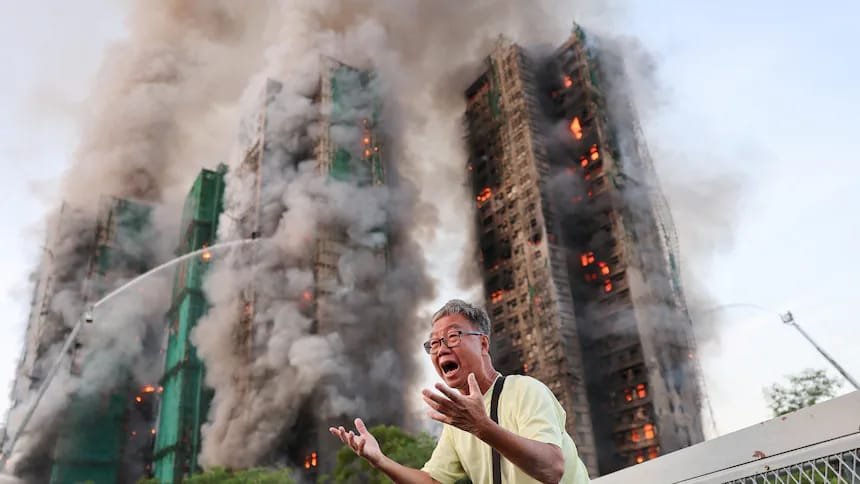
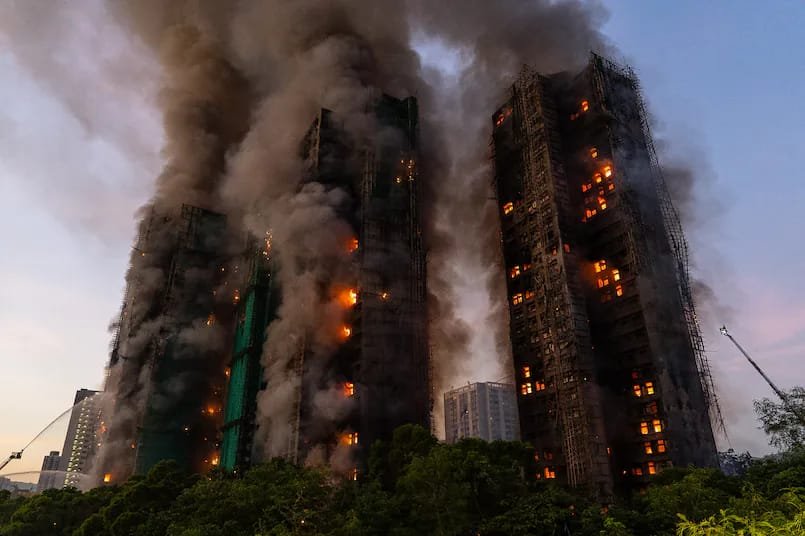
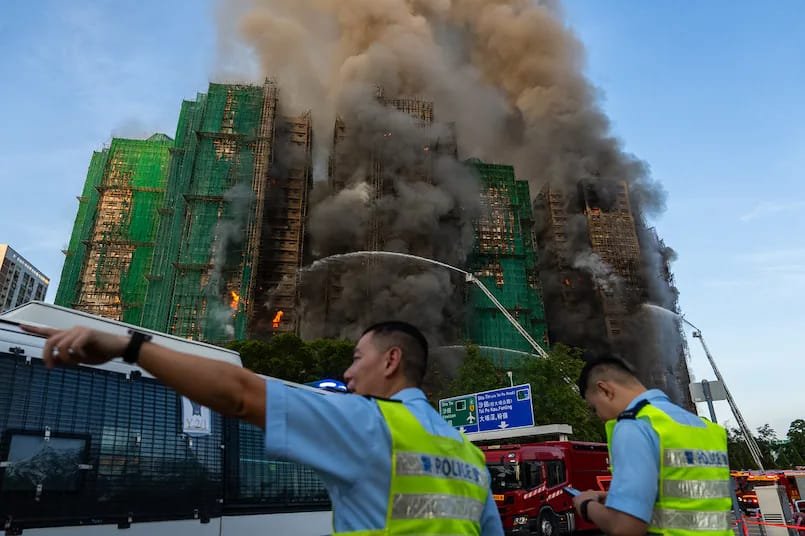
On the afternoon of November 26, 2025, a massive fire erupted at Wang Fuk Court, a high-rise residential complex in Tai Po district, in northern Hong Kong. Flames broke out around 2:50 p.m., and within minutes the blaze raced up the exterior of the towers — aided by bamboo scaffolding and construction netting draped around the buildings. As ladder trucks and hoses arrived, thick smoke and bright, hungry flames poured from windows across multiple floors. Authorities quickly escalated the emergency — by evening the fire had reached the highest threat level, a “Level 5” alarm.
By nightfall, the death toll had climbed: at least 13 people — including residents and reportedly a firefighter — lost their lives. Dozens more were injured, some critically; others remained unaccounted for amid continuing rescue and search efforts. Hundreds of residents were evacuated, many to temporary shelters.
Location & Context
Wang Fuk Court is one among many high-rise residential estates that dot Hong Kong’s skyline. Situated in Tai Po — a suburban district in the New Territories — the complex houses thousands of residents across its multiple towers.
Bamboo scaffolding remains common at construction and renovation sites across Hong Kong. In this case, the flammable scaffolding and external netting provided a rapid conduit for the fire to spread vertically — transforming what may have begun as a local blaze into a towering inferno in minutes.
The density of population in such estates, combined with interconnected towers and shared external structures for renovation, underscores a fragile balance between convenience, affordability, and safety — a balance that has now tragically tipped.
What Is Known So Far
Officials confirmed 13 dead, including at least one firefighter, and many more injured or trapped. Rescue operations continue as authorities search through smoke-drenched corridors and battered apartments.
Some residents were evacuated, while hundreds remain displaced, now sheltered in community halls and emergency shelters.
The fire’s spread was dramatically accelerated by bamboo scaffolding and netting around the tower exteriors — structures that are known fire hazards.
Among those unaccounted for were reportedly elderly residents, families with small children, and perhaps pets — heightening fears and anguish among waiting relatives.
The exact cause of the blaze is not yet confirmed; investigations are underway, and officials have promised a full review of building and renovation safety standards.
Broader Reflections
The horror of this blaze goes beyond the immediate tragedy of lives lost. It shines a harsh light on vulnerabilities inherent in high-density urban living — especially in aging estates undergoing renovations. For families with children, the idea of vertical living, often accepted as a necessity in crowded cities, can abruptly become a nightmare when safety lapses occur. The use of bamboo scaffolding, once considered economical and practical in many Asian cities, now appears dangerously outdated, especially in tower blocks.
This incident forces a reckoning: are building codes, safety regulations and oversight mechanisms keeping pace with the realities of modern urban living? When renovation, cost-cutting or neglect converge in structures inhabited by families — including children — the margin for error becomes perilously thin.
Community Reaction
Across Tai Po and beyond, grief and shock have rippled through neighbourhoods. Families of missing residents wait anxiously in makeshift shelters, many with small children clinging to them — questioning how a home could turn into a death trap so quickly. Among evacuees, fear and uncertainty mingle with sorrow: parents huddle close to their young ones, trying to reassure them even as they struggle to grasp the enormity of the disaster.
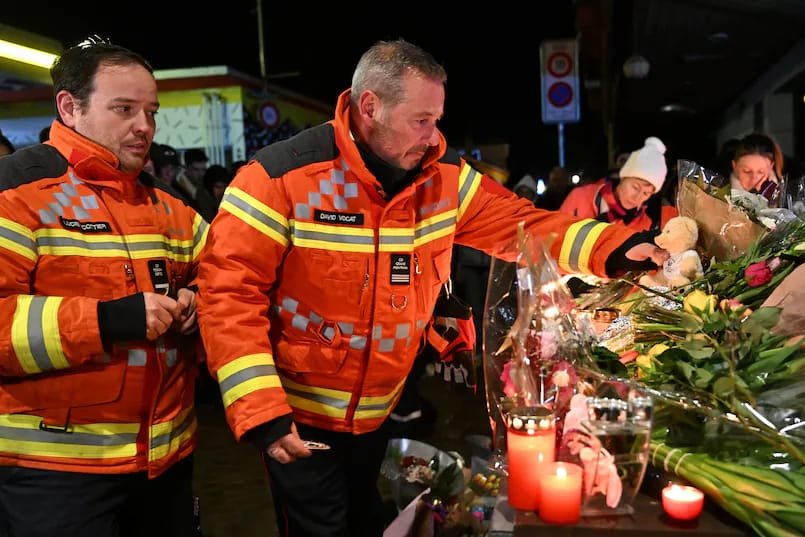
Local community centres have opened their doors to the displaced, organizing emergency aid, blankets, food, emotional support — a quiet tide of compassion amidst chaos. Neighbours share stories, tears, prayers, memories — held together by shared loss and shared shock.
Many parents now speak of sleepless nights, vowing to inspect fire exits, plan escape routes, check stairs and emergency windows — small acts of vigilance born from fear and love.
The Road Ahead
As rescue teams sift through debris and smoke-scarred corridors, investigators promise a full inquiry into the blaze’s origin, building compliance, and safety oversight. Calls are growing louder for a complete ban — not just on bamboo scaffolding around high-rise exteriors, but on any construction materials or renovation practices that compromise fire safety.
Urban planners, building managers, and city authorities may have to re-evaluate fire-safety regulations, emergency escape routes, smoke alarms — especially in ageing residential towers densely populated by families, elderly residents and children.
But regulatory fixes, while essential, are not enough. This tragedy must also awaken a deeper communal awareness — among residents, families, landlords, developers — that safety is built not only by codes and bricks, but by vigilance, empathy, and shared responsibility.
A Reflective Note
This devastating fire in Hong Kong is more than a news headline — it is a human crisis that underscores a universal truth: homes are meant to be sanctuaries, not hazards. When flame, smoke, and chaos intrude into spaces meant for sleep, play, comfort, and hope, the consequences are heartbreakingly real.
For parents raising children in high-rise towers, and for all of us living in crowded urban landscapes, this tragedy serves as a solemn reminder: vigilance can be a matter of life and death. Compassion — for neighbours, for those displaced, for those mourning — must go beyond condolence. And in our daily routines of lock-ups, renovations or maintenance, safety must never be an afterthought.
Because every life lost is a call to remember, to rebuild, and to care — for each other, and for the fragile sanctuaries we call home.

One thought on “Deadly Hong Kong high-rise blaze claims at least thirteen lives as firefighters battle towering flames, search desperately for trapped residents”