







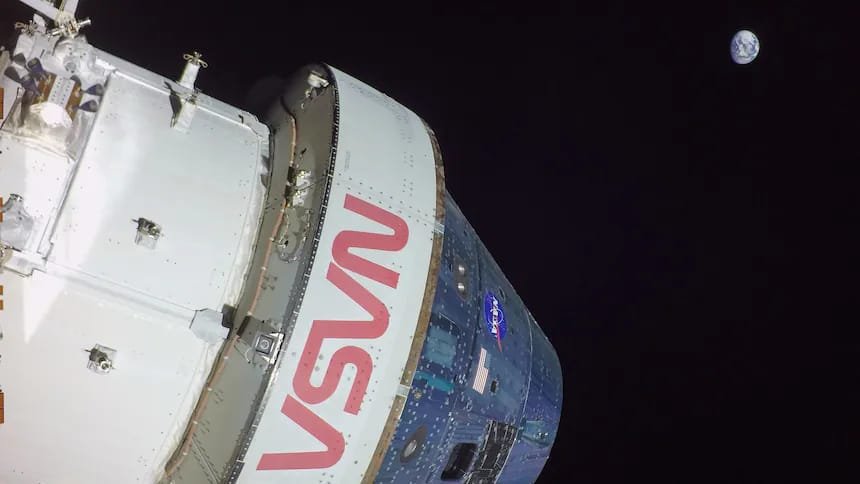
A Mission That Is More Than a Homecoming
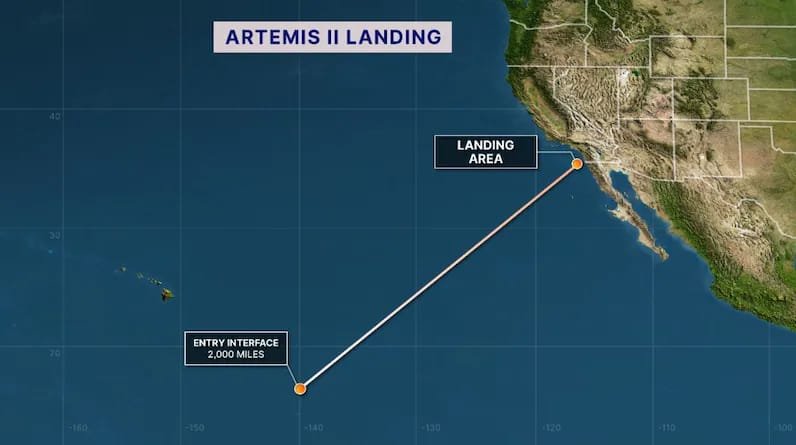
The return of Artemis II is not just the final chapter of a mission—it is the moment that will define whether humanity is truly ready to move beyond low Earth orbit again. While much of the public fascination lies in launch spectacle and lunar flybys, the real test comes at the end: splashdown. Re-entry is unforgiving, precise, and brutally honest. It doesn’t care about ambition or symbolism; it only rewards engineering excellence and disciplined execution.
Unlike routine missions to the International Space Station, Artemis II represents a leap back into deep space operations—something humanity has not attempted with crew since the Apollo era. That alone raises the stakes. The splashdown is not a procedural formality; it is a high-risk, high-precision event that will quietly determine the credibility of the entire Artemis program.
The Physics of Re-entry: Where Idealism Meets Reality
There is a tendency to romanticize space exploration, but re-entry strips away that illusion. As the spacecraft barrels back toward Earth at speeds exceeding 39,000 km/h, it encounters atmospheric friction intense enough to generate temperatures hotter than molten lava. This is not a margin-of-error environment. Even a minor miscalculation in angle or velocity can lead to catastrophic outcomes—either burning up or skipping off the atmosphere like a stone on water.
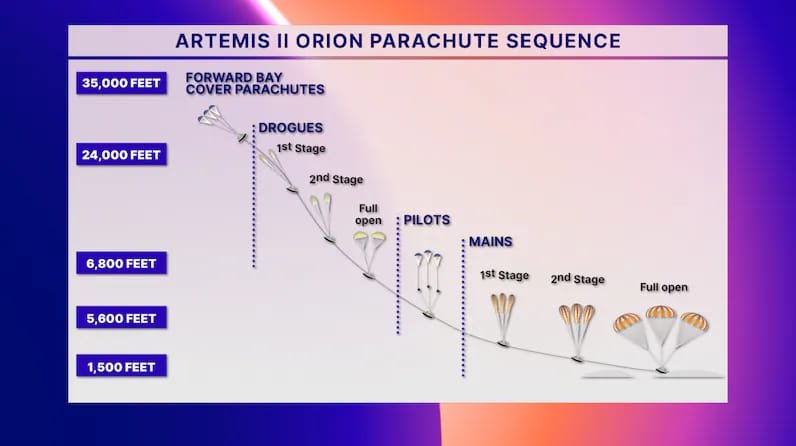
This is where Artemis II faces its most critical trial. The Orion capsule must execute a controlled re-entry profile known as a “skip re-entry,” a technique designed to reduce g-forces and manage heat loads. While innovative, it also introduces complexity. Complexity, in engineering, is often the breeding ground for failure.
History reinforces this point. During the Apollo missions, re-entry was one of the most feared phases—not because it was poorly understood, but because it was so precisely constrained. Artemis II inherits that legacy but operates in a modern context where expectations are higher and tolerance for failure is virtually nonexistent.
The Illusion of Technological Certainty
We live in an era that often assumes technology has solved the major risks of spaceflight. That assumption is dangerously misleading. Yes, computing power has increased, materials have improved, and simulations are more sophisticated. But spaceflight remains inherently risky because it operates at the edge of physical possibility.
The Orion spacecraft has undergone rigorous testing, including uncrewed missions that validated its heat shield and re-entry systems. Yet no simulation or test can fully replicate the exact conditions of a crewed deep-space return. Variables such as microfractures, unexpected thermal gradients, or even minor software anomalies can cascade into significant challenges.
In other words, Artemis II’s splashdown is not just a test of hardware—it is a test of whether modern engineering confidence is justified or overestimated.
Human Factors: The Overlooked Variable
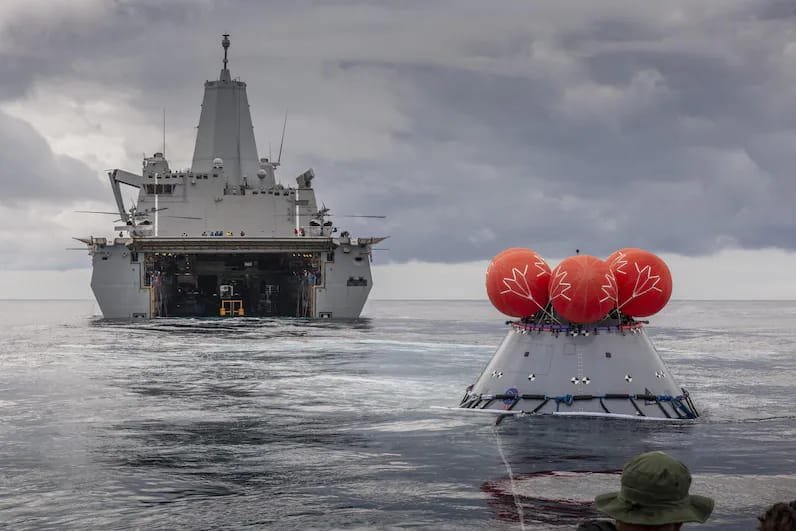
Amid discussions of heat shields and trajectories, one critical element is often underplayed: the astronauts themselves. After days in deep space, exposed to radiation and microgravity, the human body is not in peak condition. Re-entry subjects astronauts to intense g-forces and rapid physiological changes.
The transition from weightlessness to gravitational stress is abrupt and taxing. Even the most elite astronauts will face disorientation, fatigue, and physical strain. This is not merely a technical concern—it is a human one. The success of splashdown depends not only on machines performing flawlessly but also on humans enduring extreme conditions with precision and resilience.
This becomes even more significant when considering future missions to the Moon and Mars. Artemis II is effectively a rehearsal for longer, more demanding journeys. If the human element struggles here, it raises serious questions about the feasibility of extended deep-space missions.
Splashdown as a Strategic Signal
Beyond engineering and physiology, the splashdown carries geopolitical and strategic weight. Space exploration is no longer a purely scientific endeavor; it is a demonstration of national capability and technological leadership.
A flawless return would reinforce confidence in the Artemis program and solidify leadership in the new space race. Conversely, even a minor anomaly could be amplified in a global context, influencing public perception, funding decisions, and international partnerships.
In this sense, splashdown is not just an endpoint—it is a statement. It signals whether the next era of lunar exploration is grounded in reliability or still grappling with foundational challenges.
The Real Verdict Happens at the End
There is a paradox at the heart of space missions: success is often judged at launch, but proven at landing. Artemis II may execute a perfect trajectory around the Moon, capture global attention, and inspire millions. Yet if the return falters, those achievements will be overshadowed.
This is why the countdown to splashdown deserves more attention than it typically receives. It is the moment where ambition is tested against reality, where theory meets execution, and where the future of human deep-space exploration quietly hangs in the balance.
Artemis II’s return will not just conclude a mission—it will answer a fundamental question: Are we truly ready to go back to the Moon, and beyond, or are we still underestimating the unforgiving nature of space?