







Wonder Is Not Weakness — It’s the Foundation of Discovery
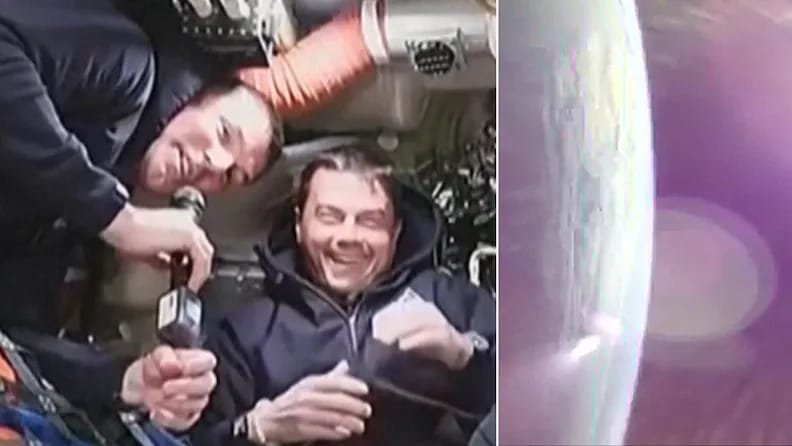
When Jeremy Hansen described his first experience in space as making him feel “like a little kid,” it wasn’t a sentimental aside—it was a profound statement about the nature of human curiosity. In a world that often equates expertise with emotional detachment, Hansen’s reaction challenges a deeply flawed assumption: that seriousness and wonder cannot coexist.
The truth is the opposite. Every major leap in science, from space exploration to artificial intelligence, has been driven not just by discipline, but by awe. Feeling small in the face of the universe is not a weakness—it is the very force that pushes humanity to understand it.
The Problem with “Professional Detachment”
Modern culture often celebrates control, precision, and rationality—especially in high-stakes professions like astronautics. Astronauts are expected to be calm, calculated, and unshakable. But Hansen’s words expose a critical gap in that narrative: emotional engagement is not a liability; it is a catalyst.
Consider this—would a purely detached mind spend decades preparing for the unknown dangers of space? Or does it take a deep, almost childlike fascination with the cosmos to sustain that level of commitment? The answer is obvious. Passion fuels perseverance, not the other way around.
Space Exploration Needs More Humanity, Not Less
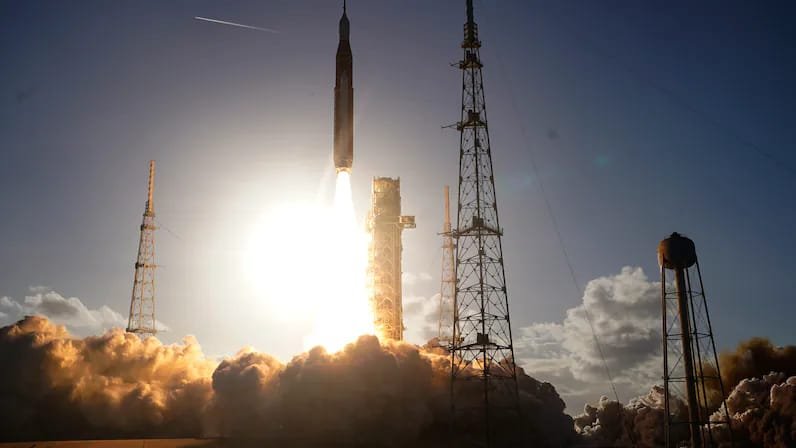
Hansen’s reaction also highlights a broader issue in how we frame space exploration. Too often, missions are reduced to technical milestones—launch dates, payload capacities, orbital mechanics. While these are essential, they strip away the human dimension that gives exploration its meaning.
When astronauts describe Earth from space, they rarely talk about equations. They talk about fragility, beauty, and unity. That perspective has real-world consequences. It shapes how we think about climate change, global conflict, and our shared responsibility as a species.
In this sense, Hansen’s “little kid” moment is not just personal—it’s political and philosophical. It reminds us why space exploration matters in the first place.
Awe as a Strategic Advantage
There is also a practical argument to be made: awe enhances performance. Studies in psychology show that experiencing wonder can improve creativity, broaden thinking, and increase problem-solving ability. For astronauts dealing with unpredictable environments, this mindset can be an asset.
A person who remains open, curious, and emotionally engaged is more likely to adapt and innovate. In contrast, rigid thinking—often mistaken for professionalism—can become a limitation in complex, dynamic situations like space missions.
Hansen’s experience suggests that the future of exploration may depend as much on mindset as on machinery.
Reclaiming Curiosity in a Cynical Age
We live in an era where cynicism is often mistaken for intelligence. Expressing genuine awe can be seen as naïve or unsophisticated. Hansen’s statement quietly rejects that cultural norm.
There is something powerful about a highly trained astronaut—someone at the peak of scientific and technical achievement—admitting to feeling like a child. It sends a clear message: curiosity does not diminish with knowledge; it deepens.
And perhaps that is the lesson here. The more we learn about the universe, the more there is to be amazed by.
Jeremy Hansen’s reflection is more than a quote—it’s a reminder of what drives human progress. The future will not be built solely by those who calculate and control, but by those who remain open to wonder.
If space—the most complex and unforgiving environment we have ever entered—can make an astronaut feel like a child, then maybe that childlike perspective is not something to outgrow. Maybe it’s something to protect.
Because in the end, it is not just rockets that take us further—it is curiosity.