








A New Lunar Rivalry Is Not About Prestige—It’s About Power
The renewed race to the Moon between the United States and China is often framed as a symbolic contest—an echo of the Cold War-era drama that culminated in the Apollo 11 Moon Landing. But this time, the stakes are far more concrete. This is not about planting flags; it is about establishing influence over the next frontier of economic, technological, and geopolitical power.
The Moon is no longer just a destination. It is a strategic platform. Nations that secure a sustained presence there will shape the rules, norms, and infrastructure of future space activity. In this sense, the current competition is less about who gets there first and more about who stays—and who controls what comes next.
The Moon as a Strategic Resource Hub
At the center of this rivalry lies a simple but transformative idea: the Moon is valuable. Its surface holds resources like water ice, particularly in permanently shadowed craters near the poles. Water can be converted into hydrogen and oxygen—key components for rocket fuel. This turns the Moon into a refueling station for deeper space missions.
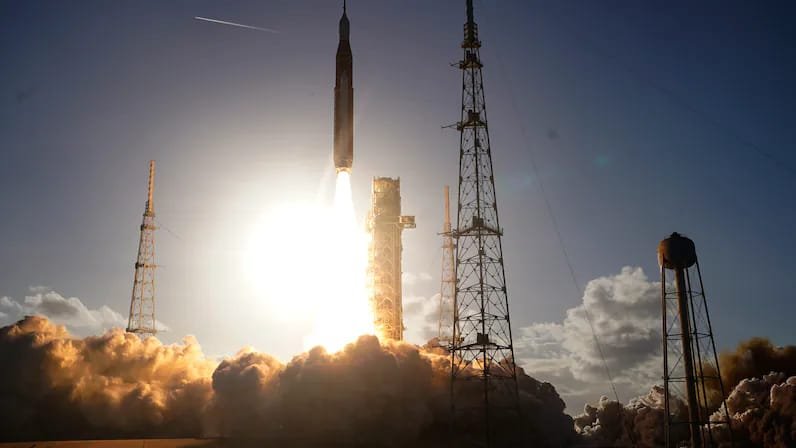
Programs like NASA’s Artemis Program aim to establish a sustainable human presence, while China’s partnership with Russia seeks to build an International Lunar Research Station. These are not short-term missions; they are long-term investments in infrastructure that could define access to space for decades.
The logic is straightforward: whoever controls the supply chain in space controls the future of space exploration. Just as maritime power once depended on control of ports and trade routes, space power will depend on control of orbital and lunar logistics.
Technology Leadership and Economic Spillover
The race to the Moon is also a race for technological dominance. Advancements in robotics, artificial intelligence, energy systems, and materials science are all being accelerated by lunar ambitions. These innovations rarely stay confined to space; they spill over into everyday industries.
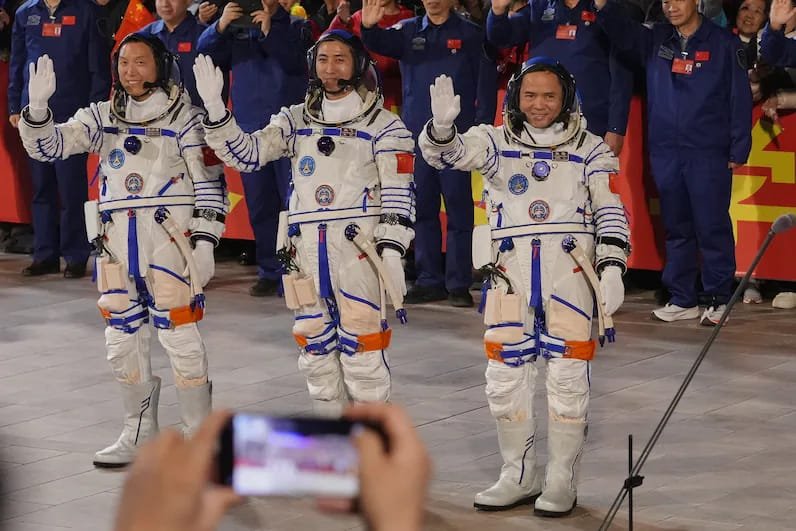
The United States, led by NASA and supported by private companies like SpaceX, is leveraging a hybrid model of public-private collaboration. China, on the other hand, is pursuing a state-driven approach through the China National Space Administration, ensuring centralized control and long-term consistency.
Both models have strengths. The U.S. benefits from rapid innovation and competition, while China excels in strategic coordination and execution. The outcome of this competition will likely determine which system becomes the dominant model for future space economies.
A Battle to Write the Rules of Space
Perhaps the most overlooked aspect of this race is governance. Space, unlike Earth, lacks a comprehensive and enforceable legal framework. Existing agreements such as the Outer Space Treaty provide broad principles but leave significant gaps—especially regarding resource extraction and territorial rights.
The United States has promoted the Artemis Accords, a set of guidelines for responsible exploration and resource utilization. China has not signed these accords and is instead building parallel partnerships.
This divergence could lead to competing systems of rules—effectively creating two spheres of influence in space. If that happens, the Moon may become not just a site of cooperation, but a stage for strategic competition and fragmentation.

Why This Race Matters to Earth
It is tempting to view lunar exploration as distant and abstract, but its consequences will be deeply terrestrial. Control over space infrastructure could influence global communications, navigation systems, and even national security. Moreover, the technologies developed for lunar missions—such as renewable energy systems and closed-loop life support—could address critical challenges on Earth.
There is also an economic dimension. The emerging space economy, projected to be worth trillions, will be shaped by the standards and infrastructure established today. Countries that lead in lunar development will have a disproportionate influence over this new market.
The Real Question: Competition or Cooperation?
The most important question is not who wins the race, but how it is run. History shows that competition can drive innovation, but unchecked rivalry can also lead to conflict and inefficiency.
A purely competitive approach risks duplicating efforts, wasting resources, and creating geopolitical tensions beyond Earth. On the other hand, meaningful cooperation—while difficult—could accelerate progress and ensure that space remains a shared domain.
The reality will likely fall somewhere in between: a mix of rivalry and collaboration. But the balance we strike now will determine whether the Moon becomes a foundation for collective advancement or another arena of division.

Conclusion: The Future Is Being Built on the Moon
The race to the Moon is not a nostalgic replay of past glory; it is a defining moment for the future. The United States and China are not just competing for lunar landings—they are shaping the architecture of the next era of human expansion.
What happens on the Moon will not stay on the Moon. It will influence economies, technologies, and global power structures here on Earth. The question is no longer whether we will return to the Moon, but what kind of future we will build when we get there.