The Arctic Is No Longer a Distant Frontier
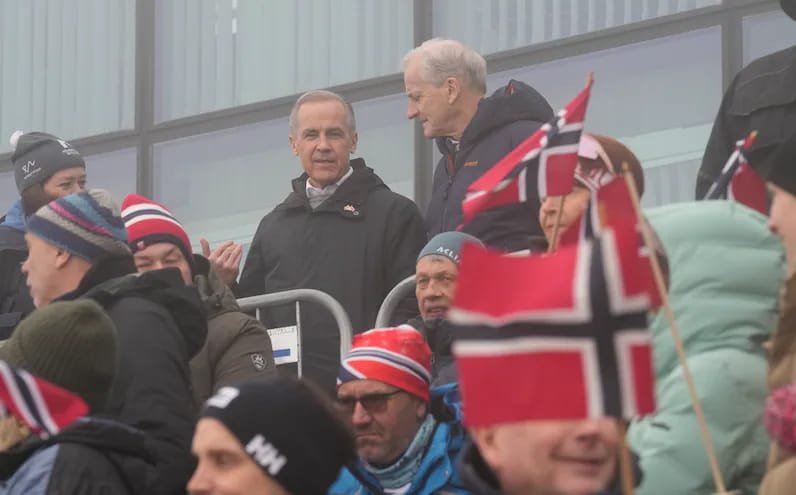
For decades, the Arctic was viewed as a frozen, distant frontier—an isolated region dominated by ice, scientific research stations, and small indigenous communities. That perception has changed dramatically. Today, the Arctic is becoming one of the most strategically contested regions on the planet. The Nordic summit in Oslo, where regional leaders gathered alongside Canada’s Mark Carney, signals a clear recognition that Arctic security is no longer a peripheral issue; it is central to global geopolitics.
Melting ice is opening new shipping routes, exposing untapped natural resources, and transforming the region into a geopolitical chessboard. As a result, tensions involving Russia and the strategic importance of Greenland have moved Arctic affairs from the margins of diplomacy to the heart of international security discussions.
Russia’s Arctic Ambitions Cannot Be Ignored
Any serious conversation about Arctic security inevitably returns to Russia. Moscow has spent the last decade dramatically expanding its military presence across the Arctic. It has reopened Soviet-era bases, deployed advanced missile systems, and strengthened its Northern Fleet. Russia views the Arctic not only as a strategic military zone but also as a vital economic corridor through the Northern Sea Route.
The Nordic countries—Norway, Sweden, Finland, Denmark, and Iceland—are increasingly aware that geography alone does not guarantee security. Russia’s activities in the region demonstrate a clear willingness to militarize the Arctic to secure both economic and strategic dominance.
Ignoring this reality would be naïve. The Oslo summit reflects a growing understanding among Nordic leaders that the Arctic must be defended not just environmentally or economically, but militarily and politically as well.

Greenland: The Quiet Strategic Prize
While Russia commands attention through its military posture, Greenland represents a quieter but equally significant strategic dimension. Greenland’s location places it at the crossroads of North America, Europe, and the Arctic Ocean. It is rich in rare earth minerals, possesses vast natural resources, and sits near emerging Arctic shipping routes.
This explains why global powers have taken increasing interest in the island. The United States already maintains a key military presence at the Pituffik Space Base (formerly Thule Air Base), recognizing Greenland’s importance for missile defense and Arctic surveillance. Meanwhile, other powers have expressed interest in mining investments and infrastructure development.
The Oslo summit implicitly acknowledges a critical truth: Greenland is not merely a remote territory—it is a strategic anchor for Arctic stability. Protecting its sovereignty and ensuring that its development aligns with democratic alliances is now a priority for Nordic security planning.
Arctic Security Is Also Climate Security
One of the most overlooked dimensions of Arctic geopolitics is climate change. As ice melts at record rates, new sea lanes such as the Northern Sea Route and potentially the Transpolar Route are becoming increasingly viable. These routes could shorten global shipping distances between Asia, Europe, and North America by thousands of kilometers.
However, the same environmental changes that create opportunity also generate instability. Infrastructure is limited, emergency response capabilities are weak, and the risk of environmental disasters—from oil spills to shipping accidents—is high.
This means Arctic security must extend beyond military deterrence. It must include coordinated environmental protection, sustainable development, and strong governance frameworks. Nordic countries, long known for their environmental leadership, have a unique opportunity to shape the rules of this emerging Arctic order.
Nordic Unity Is the Real Strategic Message
Perhaps the most important outcome of the Oslo summit is not any single policy decision but the broader message of Nordic unity. In an era where geopolitical fragmentation is increasing, cooperation among Arctic democracies sends a powerful signal.
The inclusion of partners like Canada reinforces a growing Arctic security network built on shared values: democracy, rule of law, and responsible resource management. This network is becoming increasingly important as authoritarian powers seek influence in the region.
History shows that stability in contested regions depends not only on military strength but also on strong alliances. The Nordic countries understand this lesson well, and their coordinated approach may become the foundation of a new Arctic security architecture.
The Arctic Will Define the Next Era of Geopolitics
The world is entering an era where geography, climate change, and strategic competition intersect in unprecedented ways. The Arctic sits at the center of that transformation. What was once a frozen barrier is quickly becoming a geopolitical crossroads.
The Oslo summit demonstrates that Nordic leaders recognize this shift. Their challenge now is to translate diplomatic discussions into long-term strategy—one that balances security, economic opportunity, and environmental stewardship.
If they succeed, the Arctic could become a model of cooperative governance in a changing world. If they fail, it risks becoming yet another arena of great-power rivalry.
The stakes are no longer frozen in ice—they are moving rapidly, just like the Arctic itself.
About the Author