A Dangerous Expansion of the Conflict
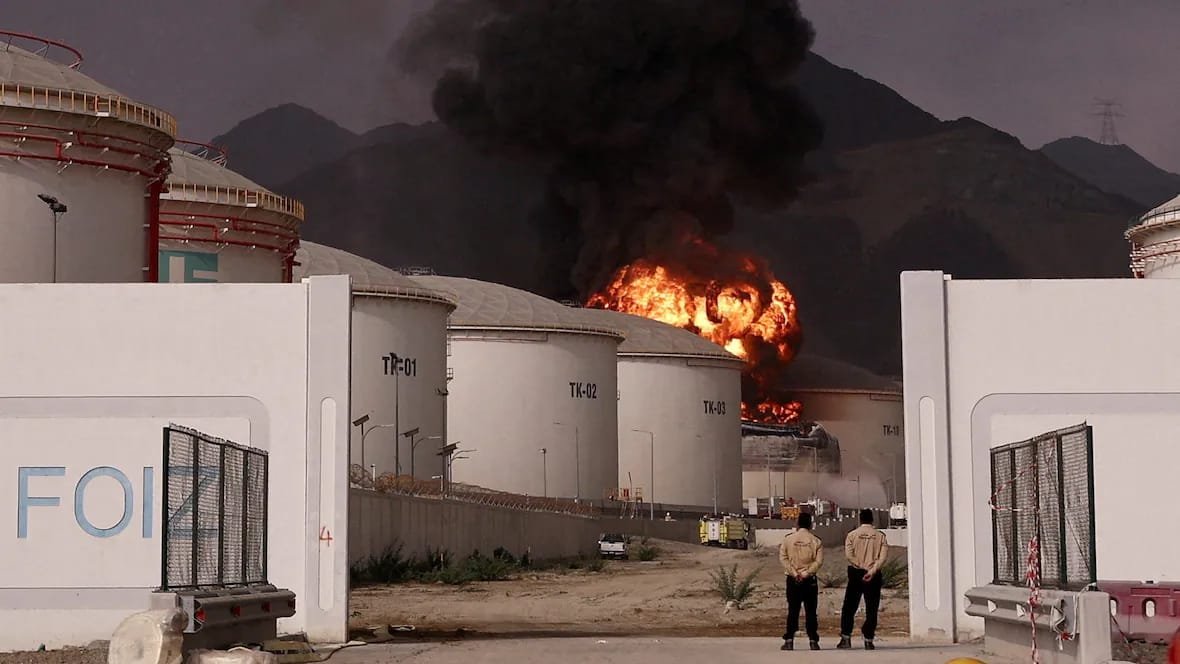
Israel’s widening assault across Lebanon marks a significant escalation in an already volatile Middle Eastern landscape. What began as targeted strikes in Beirut’s southern suburbs—areas widely associated with Hezbollah’s influence—has expanded into broader bombing campaigns across the country. This shift signals more than a tactical adjustment; it reflects a strategic transformation that risks drawing Lebanon deeper into a devastating conflict while increasing regional instability.
The expansion of airstrikes suggests that Israel is no longer focused solely on symbolic or limited retaliatory actions. Instead, it appears to be pursuing a wider military objective aimed at weakening Hezbollah’s operational capacity across Lebanon. However, the problem with broad military escalation is that it rarely remains confined to its intended targets. When bombings spread beyond specific militant strongholds, the line between military pressure and collective suffering becomes increasingly blurred.
The Strategic Logic Behind Israel’s Escalation
From Israel’s perspective, the logic behind widening the assault is rooted in security concerns. Hezbollah, backed by Iran, maintains one of the most formidable non-state military forces in the region. With tens of thousands of rockets and a sophisticated military infrastructure embedded within Lebanon, Hezbollah poses a constant threat to northern Israel.
Israeli leaders argue that striking Hezbollah’s infrastructure across Lebanon is a necessary step to dismantle a network that extends far beyond Beirut’s southern districts. Military planners often stress that militant organizations rely on dispersed supply routes, command centers, and weapons storage facilities throughout the country. Targeting only one geographic pocket would allow the group to relocate and continue operations.
In theory, expanding the battlefield could disrupt these networks and reduce Hezbollah’s operational capacity. Yet this logic carries a serious risk: military campaigns that attempt to eliminate decentralized militant networks often end up intensifying the conflict rather than resolving it.
One of the harsh realities of modern warfare is that urban environments rarely allow clean, precise military outcomes. Lebanon is a densely populated country where infrastructure, civilian neighborhoods, and militant networks often exist in close proximity. As airstrikes spread across more regions, the likelihood of civilian casualties and infrastructure destruction inevitably rises. the immediate humanitarian consequences, such destruction can produce long-term political repercussions. History repeatedly demonstrates that widespread civilian suffering can strengthen militant narratives rather than weaken them. When communities feel collectively targeted, resentment grows, recruitment increases, and political moderation becomes harder to sustain.
The 2006 war between Israel and Hezbollah offers a clear example. Despite intense Israeli bombardment intended to dismantle Hezbollah’s capabilities, the group emerged politically stronger within Lebanon. Military force alone did not eliminate the threat; instead, it reinforced Hezbollah’s position as a defender against external aggression in the eyes of many supporters.
Lebanon’s Fragile State Under Pressure
Lebanon today is far more fragile than it was in 2006. The country is already grappling with one of the worst economic collapses in modern history. Its currency has lost most of its value, public institutions are weakened, and political paralysis continues to prevent meaningful reforms.
In such an environment, expanding military operations across Lebanese territory places enormous strain on a state that barely functions. Infrastructure damage, population displacement, and economic disruption could push the country even closer to collapse. When a state becomes too weak to govern effectively, militant organizations often gain more influence rather than less.
This creates a paradox: the broader the assault becomes, the more it risks undermining the very state structures that could eventually limit Hezbollah’s power.
The Regional Ripple Effect
Another critical concern is the potential for wider regional escalation. Hezbollah is not an isolated actor; it is part of a broader network of Iranian-aligned groups across the Middle East. Any large-scale confrontation between Israel and Hezbollah carries the risk of drawing other players into the conflict, including militias in Syria and Iraq.
Even if a full regional war does not immediately erupt, the expansion of hostilities increases tensions across multiple fronts. Global energy markets, international shipping routes, and diplomatic relations throughout the region could all feel the ripple effects of prolonged instability.
The Middle East has repeatedly shown how quickly localized conflicts can spiral into broader geopolitical crises.
A Conflict That Military Power Alone Cannot Solve
The widening of Israel’s assault across Lebanon highlights a central dilemma of modern security strategy: military strength can suppress threats temporarily, but it rarely eliminates the underlying political forces that sustain them.
Hezbollah’s influence is not based solely on military capabilities. It is deeply rooted in Lebanon’s political structure, social networks, and regional alliances. Airstrikes may degrade weapons systems or disrupt operations, but they cannot dismantle the political ecosystem that allows the organization to survive.
This does not mean Israel’s security concerns are illegitimate. On the contrary, no state can ignore a heavily armed group positioned along its borders. However, history suggests that long-term stability in such conflicts requires a combination of military deterrence, diplomatic engagement, and regional political solutions.
The Risk of Repeating History
The most troubling aspect of the current escalation is the sense that the region may be repeating a familiar cycle. Military action triggers retaliation, retaliation triggers further escalation, and both sides become trapped in a conflict that neither can decisively win.
If the assault continues to expand across Lebanon, the consequences could extend far beyond immediate battlefield outcomes. The real question is not whether Israel can strike Hezbollah targets across the country—it clearly can. The more important question is whether such strikes bring the region closer to security or simply deepen the cycle of instability that has defined Middle Eastern conflicts for decades.
In the end, the widening assault may achieve short-term tactical goals. But without a broader political strategy, it risks reinforcing the very dynamics that make lasting peace so elusive.
About the Author