








This Isn’t a Cameo—It’s a Statement
The presence of Canada’s Valerie Grenier and Cameron (Cam) Gray alongside alpine legend Lindsay Vonn in the women’s downhill at the 2026 Olympic Games is more than a compelling lineup—it’s a declaration that Canadian women’s alpine skiing has moved from the margins to the main stage. Too often, Canadian skiers are framed as long shots competing in a European-dominated discipline. That narrative no longer holds. Gray and Grenier aren’t there to “gain experience.” They’re there because they belong.
Racing Beside a Legend Changes the Equation
Lindsay Vonn’s return to the Olympic spotlight—whether symbolic or competitive—reframes the race instantly. She is not just another athlete on the start list; she’s a measuring stick for greatness. For Gray and Grenier, racing in the same downhill isn’t about being overshadowed by Vonn’s legacy. It’s about testing themselves against the highest standard the sport has known in the modern era.
In elite sport, proximity matters. Training with, competing against, and being judged by comparison to legends accelerates development. We’ve seen this effect across sports—from tennis players emerging faster in the Federer-Nadal era to sprinters pushing limits during Usain Bolt’s reign. For Canada, this moment compresses years of growth into one Olympic race.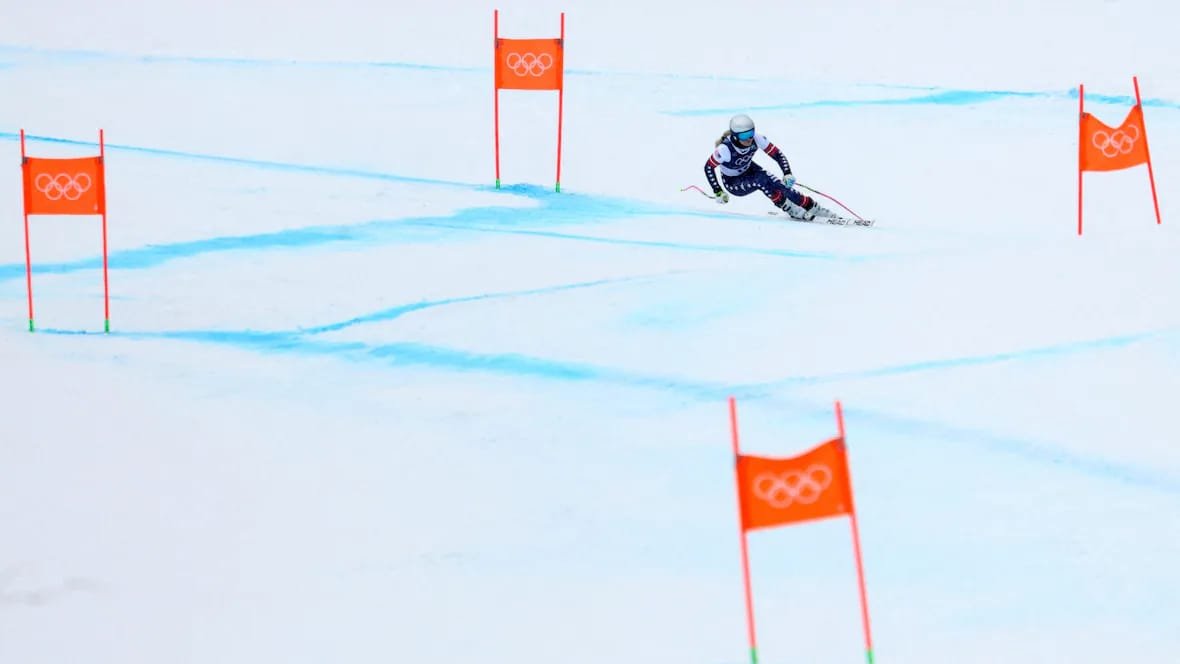
Canada’s Quiet Strength in Speed Events
Downhill skiing is brutal, technical, and unforgiving. It rewards courage, precision, and an almost reckless commitment to speed. Canada has historically produced strong speed skiers, but rarely have two women entered an Olympic downhill with both credibility and momentum at the same time.
Grenier’s consistency and Gray’s aggressive racing style represent two complementary approaches to the discipline. One thrives on control and composure, the other on attacking the course. That diversity is a strength, not a liability. It signals depth—something Canada has been criticized for lacking in women’s alpine skiing for decades.
Why This Race Matters Beyond Medals
Even if the podium remains elusive, the implications are lasting. Olympic moments shape funding decisions, youth participation, and national confidence. When young Canadian skiers see Gray and Grenier launching out of the start gate next to Vonn, they don’t see underdogs—they see proof that Canadians can compete in the sport’s most dangerous and prestigious event.
This matters in a real-world sense. National programs are built on belief as much as budgets. Visibility drives sponsorship. Sponsorship drives sustainability. Sustainability creates champions. One high-profile Olympic downhill can influence an entire generation of athletes deciding whether to stay in the sport or walk away.
The End of the “Nice Story” Era
For too long, Canadian women at the Winter Olympics have been framed through a lens of effort rather than expectation. Gray and Grenier represent a shift away from that mindset. Their inclusion alongside Vonn forces analysts, fans, and competitors alike to reassess Canada’s role in alpine skiing’s power structure.
This is no longer a feel-good story about participation. It’s a competitive reality. Canada is here, Canada is fast, and Canada is no longer asking for attention—it’s taking it.
Final Take
The women’s downhill on Day 2 of the 2026 Olympics isn’t just another race on the schedule. It’s a referendum on progress. By lining up with Lindsay Vonn, Gray and Grenier aren’t borrowing credibility—they’re asserting their own. And whether the results come now or later, this moment marks the point where Canadian women’s downhill skiing stops chasing relevance and starts defining it.